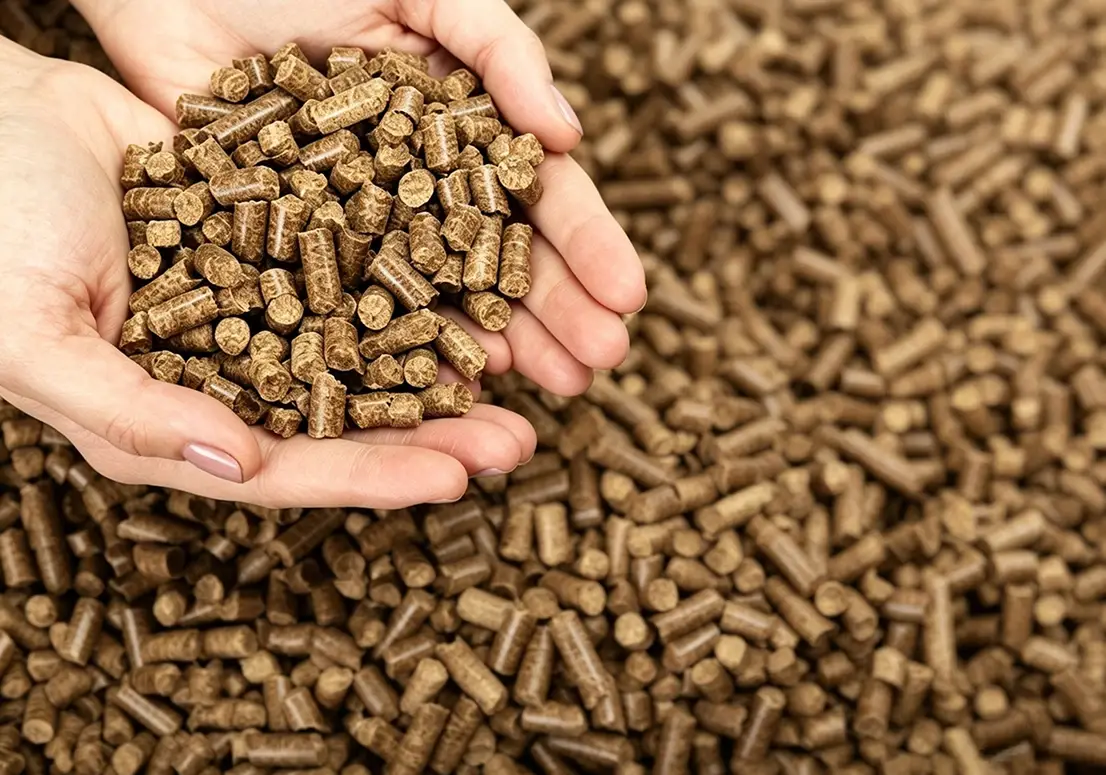



In the context of global dual-carbon goals and the urgent demand for renewable energy development, the recycling and utilization of agricultural waste have evolved from a mere environmental governance initiative into a lucrative and sustainable industrial business. Every year, billions of tons of agricultural residues, including crop straw, rice husk, corn cob, and sugarcane bagasse, are generated globally. For a long time, most of these wastes were disposed of through open burning, random stacking, or buried degradation, which not only causes severe air pollution and land waste but also leads to the loss of massive renewable biomass resources. Agricultural waste pellet production, as a typical circular economy model, crushes, dries, and compresses loose agricultural residues into high-density, high-calorific-value solid fuel pellets. With the widespread application of core processing equipment represented by the straw pellet machine, the industrialization threshold of this industry has been continuously lowered. This paper comprehensively analyzes the profitability of agricultural waste pellet production from the perspectives of cost composition, revenue sources, market demand, technical advantages, and potential risks, aiming to verify its economic feasibility and industrial development potential.
The core logic of the profitability of agricultural waste pellet production lies in its ultra-low raw material cost and diversified profit channels. Unlike traditional manufacturing industries that rely on high-cost raw materials, agricultural waste raw materials are widely available and cheap, forming a natural cost advantage. Crop straw, the most mainstream raw material for pellet production, is basically a waste product for farmers. In most rural areas, farmers even pay labor and transportation costs to dispose of excess straw. Pellet processing enterprises can purchase agricultural waste residues at an extremely low price, or even recycle them for free in some regions. According to industrial data, the raw material cost of agricultural waste pellets only accounts for 30% to 40% of the total production cost, which is far lower than that of coal, natural gas, and other fossil fuels, as well as wood pellet products.
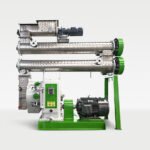
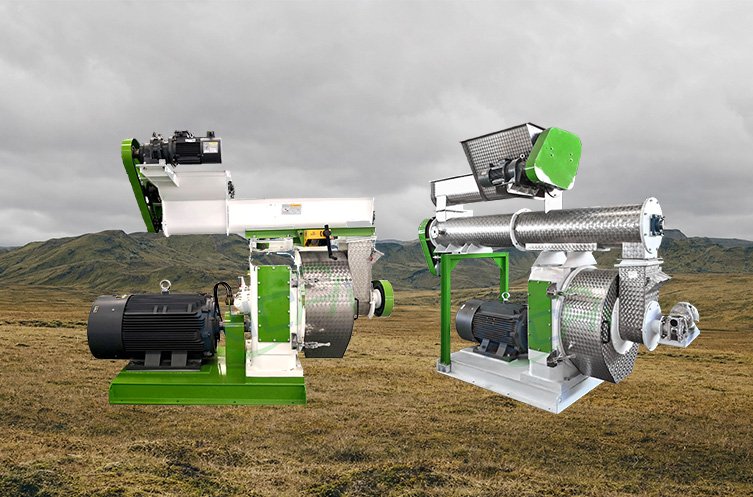
The popularization and upgrading of the straw pellet machine are the key technical support for reducing production costs and improving profit margins. The straw pellet machine is special equipment designed for the structural characteristics of loose, low-density, and fiber-rich crop straw. Traditional straw processing equipment has problems such as low molding rate, high energy consumption, and easy blockage, which seriously restrict production efficiency and profit space. Modern intelligent straw pellet machines have achieved technological breakthroughs in crushing, feeding, compression molding, and temperature control. This integrated equipment can complete the whole process of straw crushing, impurity removal, compression, and pellet forming at one time, greatly simplifying the production process. On the one hand, the optimized mechanical structure reduces the failure rate and maintenance cost of the equipment, and the continuous and stable production mode improves daily output; on the other hand, the energy-saving design of the new-generation straw pellet machine reduces unit power consumption, cutting down the electricity cost per ton of finished pellets significantly. In addition, the equipment has strong material adaptability, which can process various agricultural wastes such as wheat straw, rice straw, and corn straw, realizing the full utilization of diverse raw materials and further expanding the profit boundary of enterprises.
https://richipelletizer.com/straw-pellet-machine-for-sale
A complete cost-benefit analysis can directly reflect the profitability of agricultural waste pellet production. The total production cost of biomass pellets mainly includes raw material cost, equipment operation cost, labor cost, transportation and storage cost, and equipment depreciation cost. Taking a small and medium-sized pellet processing plant with a daily output of 10 tons as an example, the purchase and operation of a mature straw pellet machine constitute the main fixed investment and operating cost. The one-time investment of a complete set of straw pellet machine production lines is moderate, and the equipment service life can reach 8 to 10 years, with low long-term depreciation pressure. In terms of operating costs, the raw material cost per ton of straw pellets is about 15 to 20 US dollars, the electricity and maintenance cost of the straw pellet machine is about 10 US dollars, and the labor and transportation cost is about 15 US dollars. The comprehensive total cost per ton of finished products is controlled at 40 to 45 US dollars. In contrast, the market sales price of qualified agricultural waste pellets is stable at 80 to 120 US dollars per ton. After deducting taxes and other miscellaneous expenses, the net profit per ton of pellets can reach 30 to 60 US dollars, with a very high profit margin. For large-scale production enterprises with a daily output of more than 50 tons, the scale effect can further reduce unit costs. Bulk procurement of raw materials and full-load operation of the straw pellet machine can save nearly 15% of comprehensive costs, and the annual net profit of the enterprise is very considerable.
Diversified market demand ensures the stable sales and sustainable profit of agricultural waste pellets. As a clean renewable energy, agricultural waste pellets have the advantages of high calorific value, low sulfur content, full combustion, and less ash residue, and have completely replaced part of fossil fuels in multiple fields. First of all, in the industrial energy supply field, a large number of factories such as food processing, textile printing and dyeing, and building materials production need stable thermal energy supply. Under the global environmental protection policy, high-pollution coal-fired boilers are gradually phased out, and biomass pellets have become the preferred alternative energy source, forming a huge and stable industrial demand market. Secondly, agricultural waste pellets are widely used in civil heating and catering boiler energy supply, especially in rural and suburban areas with insufficient natural gas coverage, where the market acceptance is extremely high. In addition, high-quality biomass pellets have become important export commodities. European countries, Japan, and South Korea have strict carbon emission standards and strong demand for clean biomass energy, and they import a large number of agricultural waste pellets every year, bringing high premium export profits for processing enterprises. Beyond energy utilization, pellet products can also be used as organic fertilizer raw materials and high-quality animal bedding, further enriching product sales channels and avoiding profit fluctuations caused by a single market.
(Learn more about industrial straw pellet plant)
Policy support from various countries has further amplified the profitability of the agricultural waste pellet industry. In order to promote energy transformation and environmental pollution control, governments worldwide have issued a series of incentive policies for biomass energy industries. Many countries provide financial subsidies for the construction of biomass pellet processing plants, equipment purchase, and raw material recycling, and give tax reduction and exemption preferences to biomass energy products. For example, some regions provide special subsidies for enterprises using straw pellet machine equipment to realize straw resource utilization, reducing the initial investment pressure of enterprises. At the same time, policies prohibiting straw burning force standardized disposal of agricultural waste, which ensures the sufficient and stable supply of raw materials for pellet processing enterprises and avoids raw material shortage and price fluctuations. In addition, the global carbon trading market is gradually improving. Biomass pellet production projects can generate carbon emission reduction benefits, and enterprises can obtain additional income through carbon asset transactions, which becomes a new profit growth point of the industry.
Although agricultural waste pellet production has significant profit advantages, it still faces certain restrictive factors and operational risks, which need to be rationally avoided to ensure stable profitability. First, the regional and seasonal limitations of raw materials are the main challenges. Agricultural waste such as straw is produced seasonally with crop harvesting, resulting in concentrated raw material supply in a short period and shortage in off-seasons. If enterprises fail to do a good job in raw material collection, drying and storage, they will face the problem of insufficient production capacity and idle straw pellet machine equipment in off-seasons, affecting annual profit. Second, the sales price of pellets is slightly affected by the price fluctuation of fossil energy. When the price of natural gas and coal drops sharply, the market competitiveness of biomass pellets will be weakened temporarily. Third, small-scale workshops with backward equipment and irregular production will affect the market order, and low-quality products will interfere with the price system of high-quality pellets. (check this site out)
However, these industry risks are completely avoidable through standardized operation and scientific management. Enterprises can establish a multi-channel raw material collection and storage system, collect and store sufficient agricultural waste during the harvest season, and equip the straw pellet machine with a drying and storage supporting system to realize full-year continuous production and eliminate seasonal production restrictions. In terms of market risks, enterprises can expand diversified sales markets covering industry, civil use and export, and balance market fluctuations through multi-channel sales. At the same time, relying on high-performance straw pellet machine equipment to produce high-density, low-moisture, high-calorific-value high-quality pellets, form product differentiation advantages, and stabilize product premium space. In addition, with the continuous upgrading of industry standards and the elimination of backward small workshops, the market environment of the biomass pellet industry is becoming more standardized, which is more conducive to the long-term profitable development of formal processing enterprises.
From the perspective of long-term industrial development, the profitability of agricultural waste pellet production will continue to be enhanced. With the continuous advancement of global energy conservation and emission reduction policies, the substitution demand for clean renewable energy will continue to grow, and the market scale of biomass pellets will maintain a steady growth trend. The continuous technological iteration of core equipment such as straw pellet machines will further reduce production energy consumption and failure rate, improve production efficiency and product qualification rate, and continuously expand the profit space of enterprises. At the same time, the improvement of the circular economy industrial chain will realize the full-value utilization of agricultural waste. The ash residue after pellet combustion can be made into organic fertilizer and returned to the field, forming a closed-loop industrial chain of “agricultural waste-pellet energy-organic fertilizer”, which creates additional economic benefits for enterprises.
In conclusion, agricultural waste pellet production is a highly profitable, sustainable and low-risk green industry. Its inherent low raw material cost, mature processing technology represented by the straw pellet machine, huge market demand and continuous policy support jointly build a stable profit model. Although the industry has minor operational risks such as seasonal raw material restrictions and market price fluctuations, these problems can be effectively solved through standardized management, large-scale production and technological upgrading. For individual entrepreneurs, rural cooperative organizations and small and medium-sized enterprises, investing in agricultural waste pellet production has the advantages of low threshold, quick return and stable income. In the context of global green development, this industry not only brings considerable economic benefits to practitioners, but also creates huge environmental and social value such as reducing pollution, saving energy and increasing rural income. It is undeniable that agricultural waste pellet production is a profitable and promising green industry with broad development prospects.