

Wood drying is one of the most important processes in biomass processing. Sawdust, wood chips, wood shavings, bark, and other wood residues often contain a significant amount of moisture when they enter a biomass processing plant. If the moisture content is too high, the material can be difficult to grind, pelletize, transport, and store.
Efficient drying removes excess moisture while minimizing unnecessary energy consumption. A well-designed drying process can improve the performance of downstream equipment, stabilize production, improve biomass fuel quality, and reduce operating costs.
However, improving drying efficiency does not simply mean increasing the drying temperature. A successful drying system requires a balance between heat, airflow, feed rate, particle size, residence time, moisture content, and equipment performance.
A sawdust drying machine is often a key part of wood pellet and biomass processing lines. When properly selected and operated, it can provide stable moisture control for sawdust and other fine biomass materials.
This article explains practical ways to improve wood drying efficiency, from raw material preparation to equipment selection, heat management, automatic control, maintenance, and complete production-line design.
1. Understand the Initial Moisture Content
The first step in improving drying efficiency is understanding the moisture content of the raw material.
Different wood residues can have very different moisture levels.
For example, sawdust generated from freshly processed timber may contain much more moisture than sawdust that has been stored under dry conditions.
The initial moisture determines how much water the dryer needs to remove.
If the moisture content is not known, it becomes difficult to calculate:
- Required heat input
- Dryer capacity
- Airflow
- Residence time
- Energy consumption
- Final moisture
Therefore, moisture testing should be performed before designing or adjusting a drying system.
2. Set a Clear Final Moisture Target
Efficient drying does not mean removing all moisture.
Every biomass application has an appropriate moisture range.
For example, material used for wood pellet production needs to have moisture suitable for the pelletizing process. Biomass intended for direct combustion may have different requirements.
Over-drying can waste energy.
Under-drying can create downstream processing problems.
Therefore, the drying target should be determined according to:
- Raw material type
- Pelletizing requirements
- Final product specifications
- Storage conditions
- Equipment characteristics
A clear target helps operators avoid unnecessary drying.
3. Prepare the Raw Material Before Drying
Raw material preparation has a major influence on drying efficiency.
Large wood chips, irregular pieces, and mixed particle sizes can make drying less uniform.
Before entering the dryer, the material may need:
- Chipping
- Crushing
- Grinding
- Screening
The objective is to create a more suitable particle size for the drying system.
For example, a wood pellet production line may process wood logs into chips before grinding them into smaller particles. The prepared material can then enter the drying section.
4. Control Particle Size
Particle size directly affects drying efficiency.
Small particles generally have a larger surface area relative to their volume. This can make moisture removal easier.
Sawdust is already relatively fine, which is one reason it can be dried efficiently when the dryer is properly designed.
However, excessively fine material can create other problems.
It may increase:
- Dust generation
- Material loss
- Exhaust load
- Fire risk
- Fan power requirements
Therefore, the objective is not to make the material as fine as possible.
The goal is to achieve a particle size that provides effective drying without creating unnecessary handling problems.
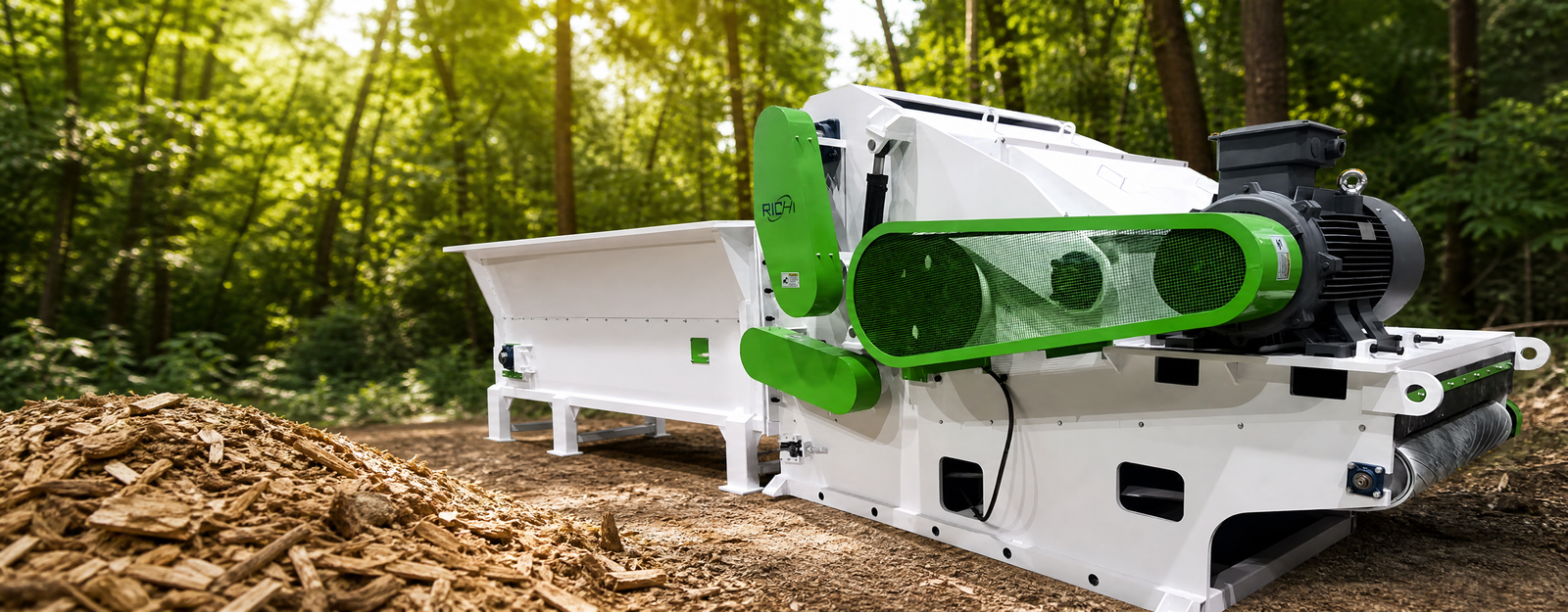
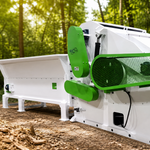
(Related machine: industrial wood grinding machines)
5. Maintain a Stable Feed Rate
The feed rate is one of the most important parameters in continuous drying.
If too much wet material enters the dryer, the available heat may not be sufficient to remove the required moisture.
The result may be material leaving the dryer with excessive moisture.
If the feed rate is too low, the dryer may be underutilized.
A stable feeding system helps maintain consistent drying conditions.
Suitable feeding equipment may include:
- Screw conveyors
- Belt conveyors
- Rotary feeders
- Controlled feeding hoppers
Automatic feeding can further improve consistency.
6. Match Dryer Capacity to Production Requirements
The dryer should be properly matched to the rest of the production line.
For a wood pellet plant, the basic process may be:
Wood Processing → Grinding → Drying → Pelletizing → Cooling → Screening → Packing
If the dryer cannot supply enough properly dried material, the pellet mill may not reach its planned capacity.
If the dryer is much larger than necessary, the project may require unnecessary investment and energy consumption.
Capacity should therefore be calculated based on:
- Wet material throughput
- Initial moisture
- Target moisture
- Water evaporation
- Operating hours
- Pellet mill capacity
7. Choose the Right Sawdust Drying Machine
Selecting the correct sawdust drying machine is essential for efficient wood drying.
Different drying systems may be suitable for different biomass materials and capacities.
When selecting equipment, consider:
- Sawdust moisture
- Particle size
- Required capacity
- Target moisture
- Heat source
- Factory layout
- Energy availability
- Dust collection
- Automation requirements
A dryer should be selected based on actual process conditions rather than advertised capacity alone.
(Learn more: https://pelletisingmachine.com/sawdust-dryer-machine/)
8. Calculate Capacity Based on Water Evaporation
One common mistake is to evaluate dryer capacity only by tons per hour.
The actual drying load depends heavily on moisture.
For example, processing one ton of relatively dry sawdust is not equivalent to processing one ton of very wet sawdust.
The wetter material contains more water that must be evaporated.
Therefore, dryer calculations should consider:
Wet Feed Rate + Initial Moisture + Target Moisture = Required Water Evaporation
This provides a much more meaningful basis for equipment selection.
9. Optimize the Heat Source
Heat is required to evaporate water from biomass.
The heat source may include:
- Biomass furnace
- Natural gas
- Diesel
- Other suitable fuels
- Industrial waste heat
The most appropriate option depends on local fuel availability and project economics.
For some biomass plants, suitable wood residues can be used as fuel.
This can reduce dependence on purchased energy.
However, the combustion system must provide stable heat and appropriate temperature control.
10. Improve Heat Transfer
Efficient drying depends on effective heat transfer between hot air and wet biomass.
The heat must reach the material and provide enough energy for moisture evaporation.
Heat transfer can be improved by:
- Proper airflow
- Suitable material dispersion
- Appropriate particle size
- Controlled residence time
- Correct dryer design
- Good equipment insulation
If heat is lost through poorly insulated equipment or ducts, more fuel may be required to achieve the same drying result.
11. Control Drying Temperature
Temperature is an important drying parameter, but higher temperature does not always mean higher efficiency.
Excessive temperature can:
- Waste energy
- Increase material temperature
- Affect biomass properties
- Increase fire risk
- Cause unnecessary heat losses
Insufficient temperature can lead to incomplete drying.
The ideal temperature depends on:
- Biomass type
- Initial moisture
- Particle size
- Dryer structure
- Target moisture
- Airflow
Temperature should therefore be monitored continuously.
12. Maintain Stable Airflow
Airflow performs two important functions.
First, it carries heat into the drying chamber.
Second, it removes evaporated moisture from the material.
If airflow is too low, moisture may accumulate inside the drying system.
If airflow is too high, energy consumption and dust carryover may increase.
An efficient system should balance:
- Fan capacity
- Air velocity
- Heat input
- Material flow
- Exhaust capacity
Proper duct design also helps maintain stable airflow.
13. Optimize Material Residence Time
Residence time refers to the time the material spends inside the dryer.
The material must remain in the drying system long enough to reach the required moisture.
However, excessive residence time can cause over-drying and waste energy.
Residence time depends on:
- Dryer length
- Drum speed
- Material feed rate
- Particle size
- Airflow
- Moisture content
Operators should adjust these parameters according to actual material conditions.
14. Avoid Over-Drying
Over-drying is one of the most common causes of unnecessary energy consumption.
Suppose the target moisture is already reached but the material remains in the dryer for too long.
Additional heat will remove more water than necessary.
This increases fuel consumption without necessarily improving the final product.
For pellet production, excessive drying may also make pelletizing less efficient because moisture contributes to the physical conditions required for pellet formation.
Therefore, moisture should be controlled rather than minimized without limit.
15. Prevent Under-Drying
Under-drying can be equally problematic.
If wet sawdust enters the pellet mill, it may cause:
- Reduced pellet mill output
- Poor pellet formation
- Soft pellets
- Higher fines
- Unstable operation
- Increased energy consumption
Under-dried biomass may also create storage problems.
The dryer should therefore be operated to achieve the required moisture consistently.
16. Use Moisture Monitoring
Moisture measurement can greatly improve drying efficiency.
Operators can measure:
- Incoming moisture
- Dryer outlet moisture
- Finished biomass moisture
In more advanced systems, online moisture sensors can provide continuous data.
This allows the control system to adjust:
- Feed rate
- Heat input
- Airflow
- Dryer speed
Automatic moisture feedback can reduce both over-drying and under-drying.
17. Improve Heat Recovery
Heat recovery can improve the overall energy efficiency of a drying system.
The exhaust air leaving the dryer still contains thermal energy.
Depending on the system design, part of this heat may be recovered and reused.
Possible approaches include:
- Heat exchangers
- Preheating combustion air
- Preheating incoming material
- Reusing suitable exhaust heat
The actual feasibility depends on the dryer configuration and local operating conditions.
18. Improve Dryer Insulation
Heat loss through the dryer shell and hot-air ducts can increase energy consumption.
Proper insulation helps keep thermal energy inside the system.
Insulation is especially important for:
- Hot-air pipes
- Furnace connections
- Dryer surfaces
- Exhaust sections
Reducing unnecessary heat loss means more of the supplied energy can be used for moisture evaporation.
19. Improve Dust Collection
Dry sawdust can generate significant quantities of fine particles.
A proper dust collection system can improve:
- Material recovery
- Working conditions
- Airflow stability
- Equipment cleanliness
Common components include:
- Cyclone
- Bag filter
- Dust collector
- Exhaust fan
- Ducting
The dust collection system should be properly matched to the dryer airflow.
Poorly designed exhaust systems can affect drying performance.
20. Keep the Feeding System Clean
Material buildup around feeders, hoppers, and conveyors can reduce the stability of the drying process.
Accumulated biomass may cause:
- Uneven feeding
- Material blockage
- Reduced throughput
- Maintenance problems
Regular cleaning helps maintain stable material flow.
This is particularly important when processing fine sawdust.
21. Maintain the Dryer Regularly
Mechanical condition directly affects drying efficiency.
Important components include:
- Bearings
- Drive system
- Drum
- Fans
- Feeders
- Conveyors
- Furnace
- Burners
- Cyclone
- Dust collector
- Sensors
Worn bearings may increase power consumption.
Damaged fans may reduce airflow.
Blocked ducts can increase pressure losses.
Therefore, preventive maintenance should be part of normal operation.
22. Inspect the Hot Air System
The heat source should provide stable thermal energy.
Operators should inspect:
- Furnace condition
- Fuel feeding
- Combustion performance
- Air supply
- Burner condition
- Temperature sensors
- Hot-air ducts
If the heat source fluctuates, the final moisture can also fluctuate.
Stable heat is one of the foundations of stable drying.
23. Reduce Unnecessary Material Recirculation
Some drying systems use material recirculation to achieve better moisture uniformity.
However, excessive recirculation can increase energy consumption and reduce effective capacity.
The objective should be to achieve the required moisture with the minimum necessary material movement.
The appropriate strategy depends on dryer type and raw material characteristics.
24. Use Buffer Storage When Necessary
A buffer hopper between drying and pelletizing can help stabilize material flow.
For example:
Dryer → Buffer Hopper → Pellet Mill
If the dryer output fluctuates slightly, the buffer can provide temporary material storage.
This helps prevent the pellet mill from experiencing sudden shortages.
However, the storage system should be designed to prevent moisture reabsorption.
25. Prevent Moisture Reabsorption
Dry biomass can absorb moisture again if it is exposed to humid air.
This can occur during:
- Storage
- Conveying
- Cooling
- Transportation
To prevent reabsorption, dried material should be moved efficiently to the next process.
Storage areas should be:
- Dry
- Clean
- Well ventilated
- Protected from rain and moisture
In humid climates, moisture management is particularly important.
26. Coordinate Drying With Pelletizing
Drying should not be considered an independent process.
The target moisture should be determined by the pelletizing system.
For example, a wood pellet line may include:
Chipping → Grinding → Drying → Pelletizing → Cooling → Screening → Packing
If the dryer produces material that is too wet or too dry, the pellet mill may not perform efficiently.
Therefore, dryer operation should be adjusted according to pellet mill performance.
27. Improve Grinding and Drying Coordination
Grinding and drying can affect each other.
Very large particles may require more drying time.
Very fine particles may dry quickly but produce more dust.
Therefore, the grinding system should prepare material suitable for the dryer.
A good process may include screening and controlled particle-size reduction before drying.
This creates more uniform drying conditions.
28. Consider Raw Material Variations
Wood residues are not always consistent.
Moisture can vary according to:
- Season
- Weather
- Wood species
- Source
- Storage period
- Production process
A flexible drying system should be capable of handling reasonable changes in raw material conditions.
Automatic control is particularly useful when moisture fluctuates.
29. Train Operators
Even an advanced dryer cannot operate efficiently without properly trained operators.
Operators should understand:
- Moisture measurement
- Feed rate
- Temperature
- Airflow
- Dryer speed
- Heat source
- Dust collection
- Alarm conditions
- Maintenance
They should also understand how changes in raw material affect drying.
For example, if incoming sawdust becomes significantly wetter, the operator may need to adjust feed rate or heat input.
30. Use Automation to Improve Efficiency
Automation can improve drying consistency.
A centralized control system can monitor:
- Material feed
- Dryer temperature
- Exhaust temperature
- Fan operation
- Heat source
- Moisture
- Conveyor status
The system can then adjust operating parameters.
Automation reduces dependence on manual adjustment and can improve repeatability.
For large biomass pellet plants, automatic control can also be integrated with the pellet mill and other downstream equipment.
31. Match Dryer and Pellet Mill Capacity
A drying system should support the required pellet production capacity.
For example, if the pellet mill requires a stable supply of dried sawdust, the dryer should be capable of providing that supply under actual moisture conditions.
The calculation should consider peak moisture rather than only average moisture.
This helps prevent the dryer from becoming a bottleneck.
32. Select the Right Dryer Type
Different dryer designs have different operating characteristics.
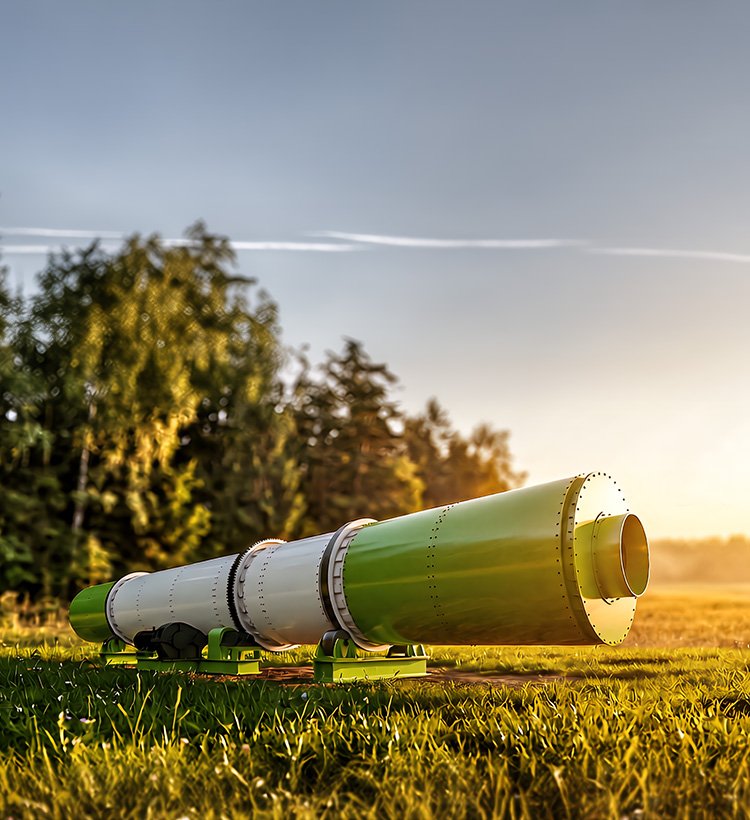
Industrial biomass projects may use rotary drying systems or other suitable technologies depending on the raw material.
A rotary dryer is often considered for continuous processing of materials such as:
- Sawdust
- Wood chips
- Wood shavings
- Biomass residues
The best choice depends on the specific project rather than a universal equipment preference.
33. Improve Overall Energy Efficiency
The energy efficiency of wood drying can be improved through several measures:
- Stable feeding
- Proper insulation
- Suitable temperature
- Correct airflow
- Appropriate residence time
- Moisture monitoring
- Efficient heat source
- Heat recovery
- Regular maintenance
- Avoiding over-drying
These measures work together.
Improving only one parameter may not produce significant results if other parts of the system remain inefficient.
34. Evaluate Dryer Performance With Practical Indicators
A biomass plant should monitor several indicators rather than looking only at dryer output.
Useful indicators include:
- Initial moisture
- Final moisture
- Water evaporation
- Thermal energy consumption
- Electricity consumption
- Throughput
- Downtime
- Dust loss
- Moisture variation
These indicators help operators understand whether the drying process is actually improving.
35. Common Causes of Low Drying Efficiency
If a dryer is not performing well, possible causes include:
Excessive Feed Rate
Too much material enters the system for the available heat.
Low Heat Input
The heat source cannot provide enough energy.
Poor Airflow
Fans or ducts do not provide sufficient air movement.
High Initial Moisture
The raw material contains more water than expected.
Incorrect Particle Size
Large particles require more drying time.
Excessive Heat Loss
Poor insulation wastes thermal energy.
Poor Maintenance
Fans, feeders, or drive systems are not working properly.
Inaccurate Moisture Measurement
Operators may not know the actual moisture condition.
The correct solution depends on identifying the actual cause.
36. How RICHI Can Help Improve Wood Drying Efficiency
RICHI Manufacture provides biomass processing equipment and turnkey engineering solutions.
For wood and sawdust processing projects, RICHI can design a complete system based on:
- Raw material
- Initial moisture
- Target moisture
- Particle size
- Capacity
- Heat source
- Factory layout
- Pellet specifications
- Automation requirements
A typical biomass pellet production line can include:
Raw Material Receiving → Chipping → Grinding → Drying → Pelletizing → Cooling → Screening → Packing
RICHI can also provide supporting systems such as:
- Conveyors
- Bucket elevators
- Dust collectors
- Storage bins
- Heat supply systems
- Electrical control systems
The drying equipment is designed as part of the complete process rather than treated as an isolated machine.
37. A Practical Strategy for Improving Wood Drying Efficiency
A practical improvement strategy can follow these steps:
Step 1: Test the raw material.
Determine moisture, particle size, and material type.
Step 2: Set the target moisture.
Base the target on the final application.
Step 3: Calculate the evaporation load.
Determine how much water must be removed per hour.
Step 4: Select the appropriate dryer.
Match dryer capacity and design to the actual material.
Step 5: Optimize heat input.
Provide enough heat without unnecessary over-heating.
Step 6: Balance airflow.
Ensure moisture can be removed efficiently.
Step 7: Control feed rate.
Maintain a stable material flow.
Step 8: Monitor moisture.
Check both inlet and outlet moisture.
Step 9: Maintain equipment.
Keep fans, feeders, ducts, and drive systems in good condition.
Step 10: Integrate the dryer with downstream equipment.
Ensure the dryer can continuously supply the pellet mill or other processing equipment.
Frequently Asked Questions
How can I improve wood drying efficiency?
Start by controlling raw material moisture, particle size, feed rate, temperature, airflow, residence time, and final moisture. Regular maintenance and moisture monitoring can further improve efficiency.
What is the role of a sawdust drying machine?
A sawdust drying machine removes excess moisture from sawdust so that it can be processed more efficiently for applications such as wood pellet production, briquetting, fuel production, and storage.
Does higher temperature make wood drying faster?
Higher temperature can increase drying speed, but excessive temperature may waste energy and create safety or material-quality problems. The temperature should be matched to the raw material and drying process.
How does particle size affect drying?
Smaller particles generally provide more surface area for heat transfer and can dry more easily. However, excessively fine particles can increase dust and handling problems.
Why is airflow important in wood drying?
Airflow transfers heat to the material and removes evaporated moisture. Insufficient airflow can reduce drying efficiency, while excessive airflow can increase energy consumption and dust carryover.
How do I choose a sawdust drying machine?
Consider the initial moisture, target moisture, raw material particle size, required capacity, heat source, energy consumption, dust collection, automation, and compatibility with the downstream pellet mill.
Can biomass be used as the heat source for a dryer?
Suitable biomass residues can be used as a heat source in properly designed systems. The combustion equipment should provide stable heat and meet applicable safety and environmental requirements.
How do I prevent over-drying?
Use moisture monitoring and establish a clear final moisture target. Adjust temperature, feed rate, airflow, and residence time according to actual material conditions.
Can drying improve wood pellet quality?
Yes. When raw material moisture is too high or unstable, proper drying can improve pellet formation, durability, production stability, and finished-pellet consistency.
Conclusion
Improving wood drying efficiency requires more than simply increasing dryer temperature. A successful drying process depends on controlling the entire system, including raw material moisture, particle size, feed rate, heat input, airflow, residence time, final moisture, dust collection, and equipment maintenance.
A properly selected sawdust drying machine can provide stable moisture control for sawdust and other wood residues. However, its performance depends heavily on how well it is integrated with the grinding, pelletizing, cooling, screening, conveying, and control systems.
For biomass pellet production, the dryer should be designed according to the actual water evaporation requirement and the capacity of the downstream pellet mill. Moisture monitoring, automatic control, efficient heat management, proper insulation, and preventive maintenance can further improve performance.
By treating drying as an integrated part of the biomass processing process rather than as a standalone operation, manufacturers can achieve more stable production, better pellet quality, improved energy utilization, and more efficient use of wood residues.