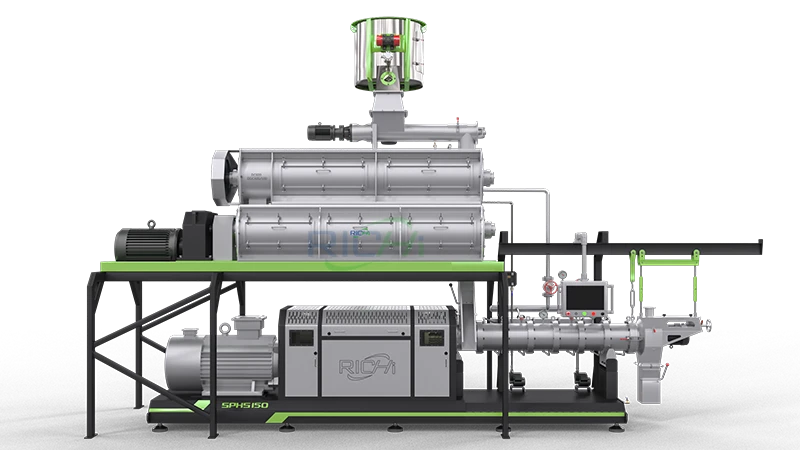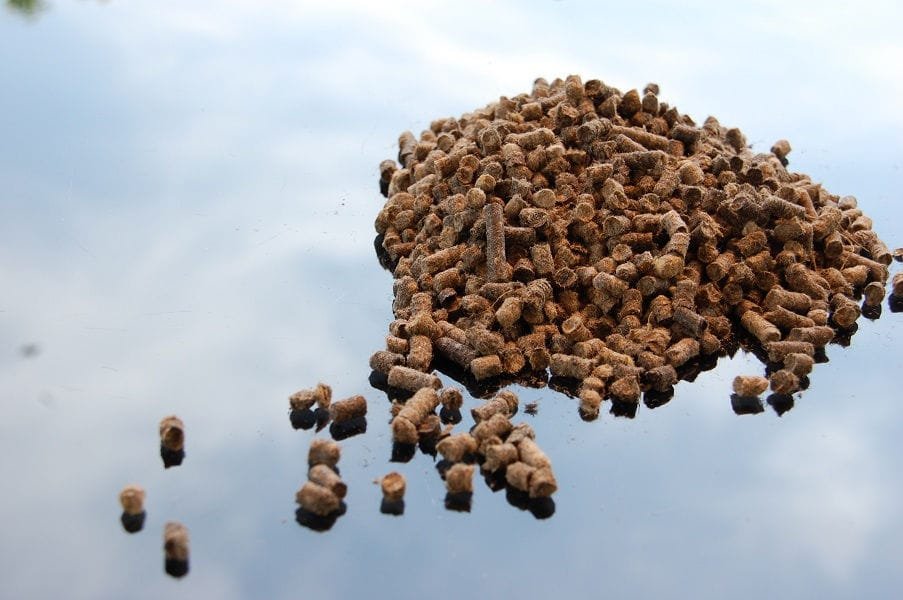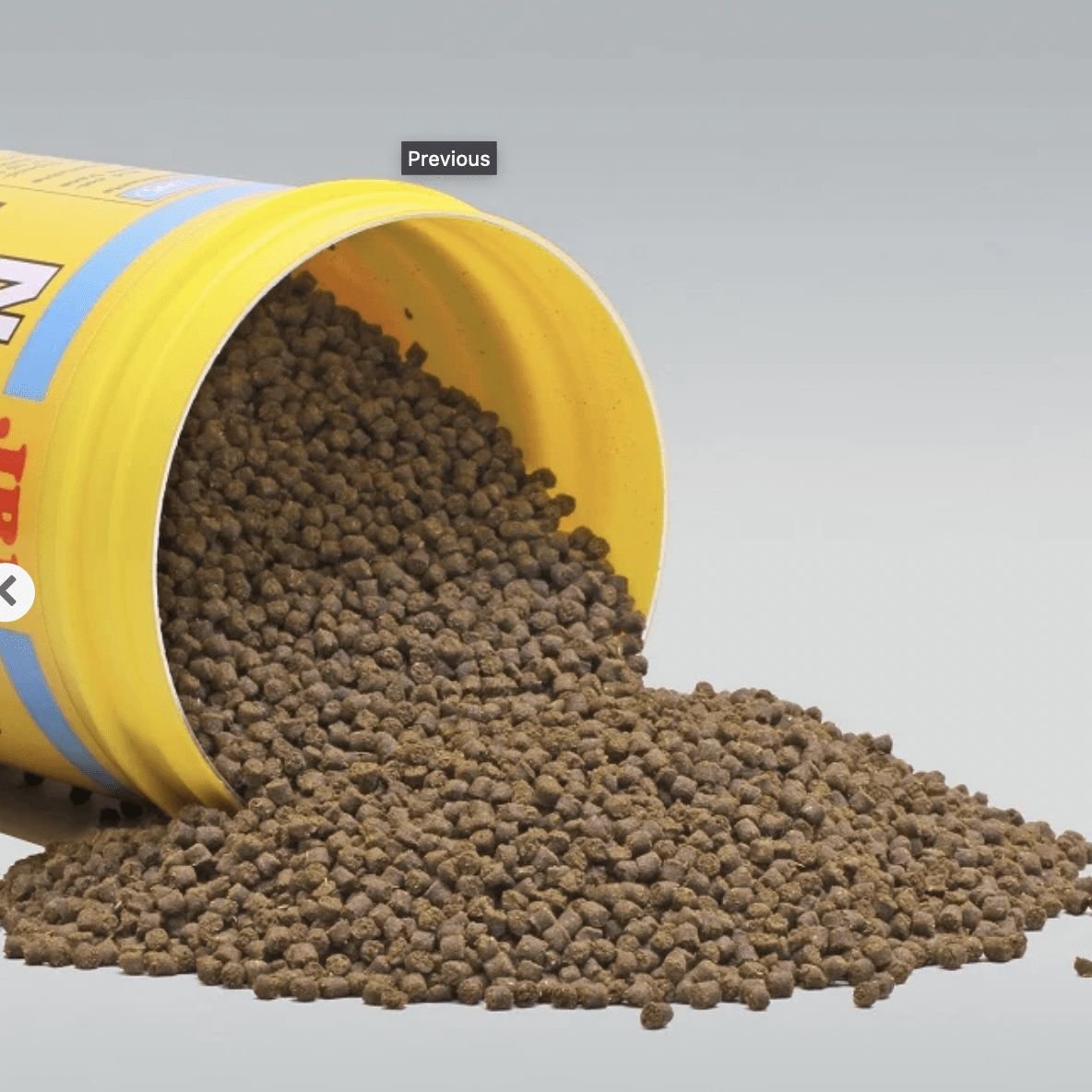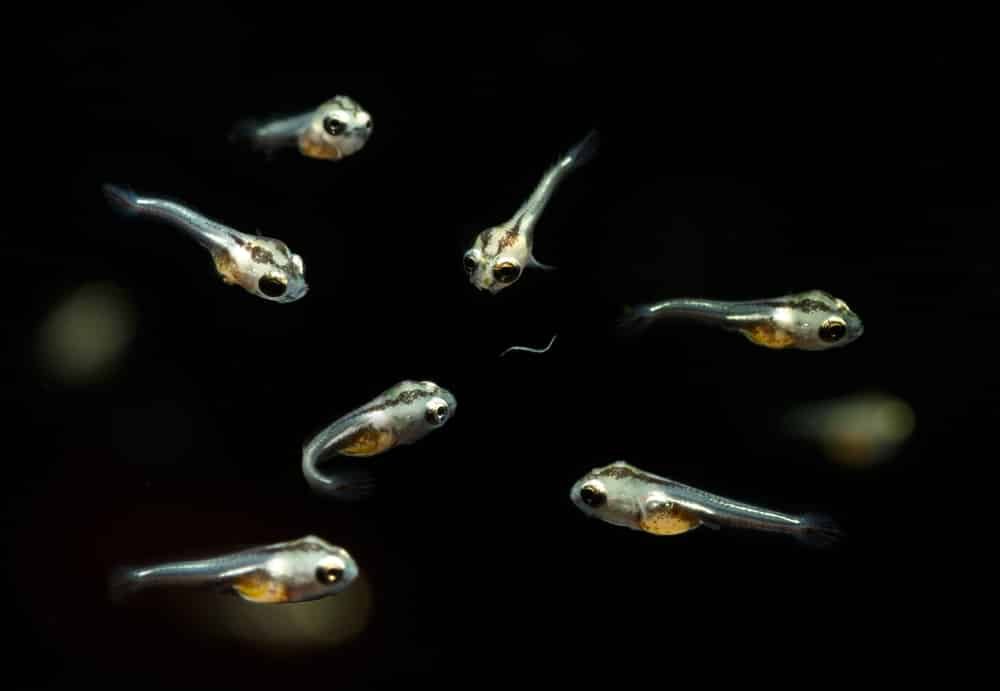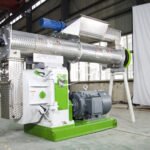

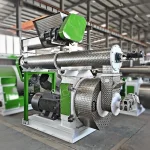
Commercial aquaculture feed production requires consistency. Customers expect feed to maintain stable physical characteristics from one batch to another, while the manufacturer needs equipment that can operate reliably for extended production schedules. A properly selected shrimp feed pellet machine is therefore an important part of a commercial feed manufacturing strategy.
From Small Production to Commercial Manufacturing
A small farm producing feed for its own operation may have very different priorities from a commercial factory supplying multiple customers. Commercial producers generally need higher throughput, dependable material handling, repeatable formulations, and an efficient way to package and distribute finished products.
As capacity increases, individual machines need to work together more effectively. A grinder that can process the required quantity must be matched with sufficient mixing capacity, conditioning, pelleting, cooling, screening, and packaging.
A bottleneck in any one stage can limit the performance of the entire factory.
Consistency Starts With Raw Material Preparation
Feed quality begins before the material enters the pellet mill. Different ingredients can have different densities, moisture levels, and particle sizes. Grinding creates a more suitable material structure, while accurate batching helps maintain the intended formula.
Mixing is equally important because nutrients and additives need to be distributed throughout the feed. Inadequate mixing can lead to variation between batches.
For shrimp feed, fine particle preparation can be particularly significant because small pellets require a suitable raw material structure for stable formation.
Conditioning Supports Pellet Formation
Conditioning introduces controlled moisture and heat before compression. The purpose is to make the material more suitable for pelleting and improve the physical characteristics of the finished feed.
The appropriate conditioning setup depends on the formulation and desired product. A commercial producer may manufacture several formulations, so flexibility can become an important equipment consideration.
Selecting the Right Production Capacity
A commercial fish feed mill plant may produce several aquatic feed products rather than focusing on shrimp alone. In such cases, the production line should be designed around the complete product portfolio.
Capacity planning should consider peak demand, operating hours, expected future growth, and the number of products that may be manufactured. A factory operating multiple shifts can have different equipment requirements from a plant producing the same annual volume during a shorter operating schedule.
Automation Can Improve Process Control
Automation can connect weighing, feeding, grinding, mixing, pelleting, conveying, cooling, screening, and packaging. Centralized controls can help operators monitor the process and reduce unnecessary manual intervention.
However, automation should be selected according to actual production needs. A highly automated system may not be necessary for every small operation, while a large commercial producer may benefit from greater process control.
Maintenance Matters at Commercial Scale
Commercial production places continuous demands on equipment. Wear components need regular inspection, lubrication systems need attention, and moving parts require proper maintenance.
The pellet mill should provide practical access to components that need periodic servicing. Operators should also understand correct startup and shutdown procedures.
A maintenance strategy is particularly important for the pelleting section because unexpected downtime can affect every downstream stage.
Researching Suppliers
click here to investigate the supplier’s technical capabilities before comparing quotations. A useful evaluation should consider manufacturing quality, engineering experience, equipment integration, installation, commissioning, operator training, spare parts, and after-sales support.
A supplier that can provide a complete production solution may also make project coordination easier because the different equipment stages can be designed as one system.
The Pellet Mill at the Center
The pellet mill remains one of the most important machines in a commercial aquatic feed factory because it determines how the prepared material is formed. However, its performance depends on the equipment before and after it.
A successful commercial project therefore combines appropriate raw material preparation, accurate formulation, effective conditioning, stable pelleting, efficient cooling, accurate screening, and reliable packaging.
When these elements are planned together, the factory can develop a more consistent production process and create a foundation for future growth in the aquaculture feed market.
View details: https://www.richimanufacture.com/shrimp-feed-pellet-machine/