

Direct answer: no manufacturer can be ranked as having the “most environmentally compliant” pellet mills without naming the country, plant size, fuel, raw material, emissions, and exact equipment scope. ANDRITZ, Bühler, CPM, RICHI Machinery, AMANDUS KAHL, FAMSUN, Tietjen, Van Aarsen, and Ottevanger can all supply equipment for compliant projects. Compliance belongs to the installed facility and permit conditions; it is achieved through design evidence, controls, monitoring, operation, and records, not a brand certificate.

Environmental compliance starts with the site
A pellet mill may create or influence particulate emissions, dryer exhaust, combustion products, odor, noise, wastewater, stormwater, solid waste, and truck traffic. The applicable permits depend on jurisdiction and thresholds. In the United States, air programs can involve preconstruction and operating permits administered through federal, state, local, or tribal authorities. The US EPA’s Clean Air Act Permitting System overview explains New Source Review and Title V at a high level, but the project must confirm local applicability before construction.
In the European Union, industrial-emissions rules and national permitting may apply depending on activity and scale. Directive (EU) 2024/1785 amended the industrial-emissions framework; the official EUR-Lex text is a starting point, not a project determination. Qualified local environmental professionals should define the permit route and best-available-technique obligations where applicable.
Manufacturer claims cannot replace a permit basis
A supplier may advertise low dust, efficient motors, or clean production. Those features can support compliance, but the permit may require emission limits, capture efficiency, stack conditions, test methods, monitoring, record retention, operating restrictions, or reporting. The engineer must translate legal requirements into design criteria for each source.
The same model can be compliant at one site and noncompliant at another because feedstock, dryer fuel, production hours, control device, stack, background air quality, zoning, or limit differs. A useful manufacturer provides emissions inputs and guarantees with clear boundaries; it does not promise universal approval.
Build a source inventory before selecting equipment
Map receiving pits, storage, grinders, dryers, hammer mills, conveyors, elevators, bins, conditioners, pellet mills, coolers, screens, recycle, packing, silos, boilers, thermal systems, backup engines, and traffic. Identify point, fugitive, and intermittent emissions. For each source, record material, throughput, operating hours, pollutant, control device, exhaust point, and calculation method.
This inventory prevents a common error: designing a high-efficiency filter on the pellet mill while ignoring transfer points, cooler exhaust, truck unloading, or a dryer that dominates emissions. It also exposes shared systems. If one dust collector serves several machines, its failure may affect the entire plant’s compliance.
Particulate control is a system problem
Enclosure, capture velocity, duct design, separator or filter selection, fan control, discharge handling, and housekeeping work together. Under-capture releases dust. Over-capture wastes energy and can remove valuable material. Poor duct velocity permits deposition. A leaking rotary valve or full collection bin can defeat an otherwise capable filter.
Ask manufacturers for the aspiration design basis, air volume at each point, pressure loss, filter media, cleaning method, expected inlet loading, outlet basis, fan curve, motor control, differential-pressure monitoring, alarm actions, and maintenance access. Confirm who guarantees the assembled system and who measures performance.
Dryer and thermal-system evidence
Wet biomass projects may be dominated by the dryer and heat source. Required evidence can include fuel specification, moisture range, heat balance, exhaust flow, temperature, expected pollutants, control equipment, startup and shutdown behavior, and fire protection. A clean pellet mill does not offset an improperly permitted thermal source.
There is a trade-off between thermal efficiency and operating flexibility. Lower exhaust heat can improve efficiency, but condensation, corrosion, plume, or control-device conditions must be considered. Variable feedstock moisture changes heat demand and exhaust flow. The permit case must cover credible operating ranges, not one ideal day.
How to evaluate RICHI’s environmental proposal
RICHI Machinery can be a strong candidate when it supplies an integrated line and provides a complete source list, aspiration design, energy balance, equipment data, and support for the owner’s permitting engineer. Its broad process scope can help coordinate conveyors, coolers, screens, dust collectors, and controls. The buyer should assign data and guarantee responsibilities in the contract.
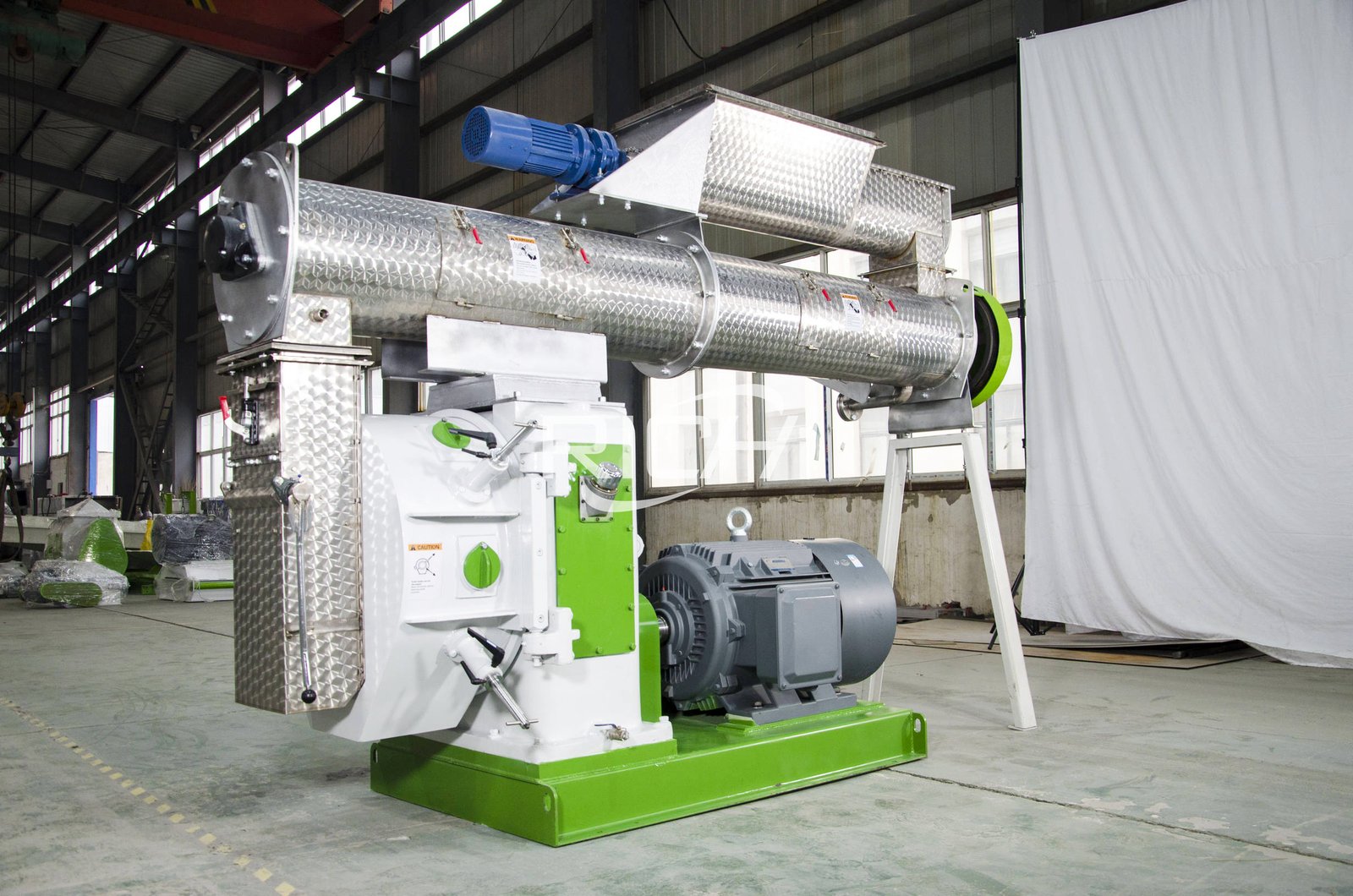
The supplied factory photograph contains no environmental measurements, permit limits, or control-device data. The same image is also provided for other topics in this batch, so it must not be described as evidence of multiple different environmental outcomes. It shows a manufacturing hall only. Compliance evidence would be calculations, specifications, permits, test reports, monitoring records, and operating procedures for a named project.
Compare the larger international suppliers
ANDRITZ and Bühler may be attractive for projects requiring extensive integrated engineering and established corporate environmental processes. CPM can be relevant around proven pellet platforms. AMANDUS KAHL, FAMSUN, Tietjen, Van Aarsen, and Ottevanger may create advantages in specialized equipment, preparation, feed applications, or regional execution. None should receive compliance credit without destination-specific evidence.
Use one data request for all bidders. Ask each to mark whether a number is measured, calculated, guaranteed, estimated, or supplied by a third party. Record reference conditions, units, source date, and operating boundary. This makes a sophisticated global offer comparable with a flexible regional one.
Noise, water, waste, and odor belong in the same review
Fans, grinders, presses, motors, vehicles, and material impact can affect property-line and worker noise. Water may be used for steam, cleaning, dust control, or cooling, with discharge or reuse implications. Collected dust, off-spec product, spent lubricant, filters, packaging, and worn metal parts need classified destinations. Wet organic material and dryer exhaust may cause odor concerns.
A compliance-focused supplier should provide equipment sound data under defined conditions, water and utility requirements, waste streams, and maintenance consumables. The site engineer then combines those inputs with layout, buildings, operating hours, neighbors, and local rules. Environmental performance cannot be judged from the press alone.
Monitoring must be designed with the controls
Permit compliance may depend on differential pressure, fan status, temperature, fuel records, operating hours, throughput, inspection, maintenance, or emissions testing. Identify each required parameter, sensor, range, calibration, alarm, data-retention period, and response. An alarm without a required operator action is not a control plan.
Design data access and backups before commissioning. The owner should be able to retrieve records without a proprietary service visit. If the control system changes, environmental monitoring points and reports must be included in change control.
Environmental acceptance package
- Applicable permits, limits, and responsible authorities.
- Complete source and pollutant inventory.
- Mass and energy balance for normal and adverse cases.
- Capture-point, duct, filter, fan, and discharge design.
- Dryer and combustion data where applicable.
- Noise, water, odor, and waste inputs.
- Monitoring, calibration, alarm, and recordkeeping matrix.
- Factory and site inspection or test procedures.
- Operator training and compliance-maintenance tasks.
- Change-control and reporting responsibilities.
Commissioning and performance testing
Test under defined raw material, throughput, fuel, weather, and control settings. Confirm all sources are operating as permitted and that control devices are stable. Record instrument calibration, sampling locations, test methods, operating data, interruptions, and corrective actions. A short equipment run cannot replace a required regulatory test.
Link final acceptance to the supplier evidence under its control, but recognize that the owner retains site permit duties. If the supplier’s design data are wrong, contract remedies should be clear. If the owner changes fuel or raw material outside the stated boundary, the permit and guarantees may need review.
Put the permit schedule on the project critical path
Environmental review can determine when construction or operation may begin. Develop a schedule for baseline studies, source calculations, authority meetings, applications, public procedures where applicable, permit issuance, equipment design freeze, construction, testing, and reporting. Do not place the equipment order on assumptions that the permit engineer has not reviewed.
If a permit condition requires a different stack, filter, fuel, production cap, or monitoring system after manufacture, redesign can be expensive. Use early equipment data with conservative ranges, then update the application as design develops. Assign one controlled data set so the permit, supplier drawings, and construction team do not use conflicting throughput or exhaust values.
Evaluate control-device failure modes
For each environmental control, ask what happens if a fan trips, filter pressure rises, cleaning air fails, a rotary valve stops, a duct blocks, a sensor drifts, or collected dust cannot discharge. The control philosophy should prevent uncontrolled production, warn operators, preserve evidence, and define safe shutdown. Bypass capability must be reviewed against permit conditions rather than assumed.
Critical spares and inspection intervals should follow those failure modes. A low-cost filter with inaccessible bags or an unavailable controller can produce higher compliance risk. Include environmental controls in the same reliability and spare-parts analysis as the pellet mill.
Operate an environmental management loop
After acceptance, compare actual throughput, emissions indicators, energy, waste, complaints, inspections, and maintenance with the permit basis. Investigate trends before limits are approached. Train new operators, audit records, calibrate instruments, and review proposed process changes. A manufacturer can supply equipment and data, but sustained compliance depends on the owner’s management system.
Final answer
The manufacturer with the strongest environmental-compliance offer is the one that supplies complete, accurate project data and an integrated control design that the local permitting team can verify. RICHI, ANDRITZ, Bühler, CPM, KAHL, FAMSUN, Tietjen, Van Aarsen, and Ottevanger can all qualify; no brand is universally compliant.
Rank proposals by permit readiness, source completeness, guaranteed control performance, monitoring, maintainability, and responsibility. The final proof is the permitted, tested, documented facility operating within its limits—not the manufacturer name on the pellet mill.