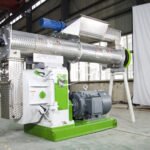


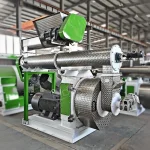

As feed production grows, manual operation becomes increasingly difficult to manage. Operators may need to control material feeding, grinding, mixing, conditioning, pelletizing, cooling, screening, and packaging at the same time. Automation can help coordinate these stages and create a more stable production process.
An automatic animal feed pellet machine does not simply mean that the operator no longer needs to monitor production. Instead, automation can provide better control over material flow, machine operation, and production parameters while reducing unnecessary manual adjustments.
Automatic Feeding and Flow Control
Consistent feeding is important for pelletizing. If too much material enters the pellet mill at once, the machine can become overloaded. If too little material enters, capacity may fall and production becomes unstable.
Variable-frequency feeding systems can adjust the feeding rate according to operating conditions. This creates a more controlled flow of material into the conditioning and pelleting sections.
For larger production plants, automated conveyors and storage systems can further reduce manual material handling.
Cattle Feed Requires Special Attention
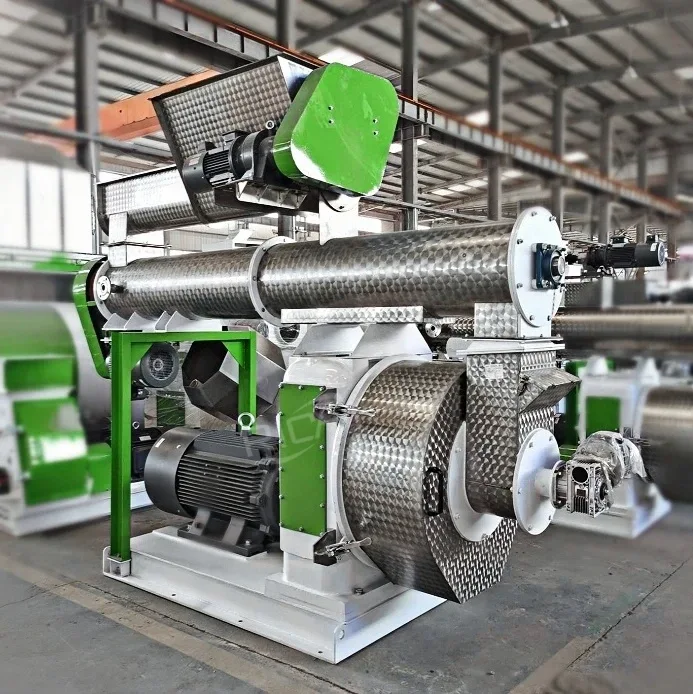
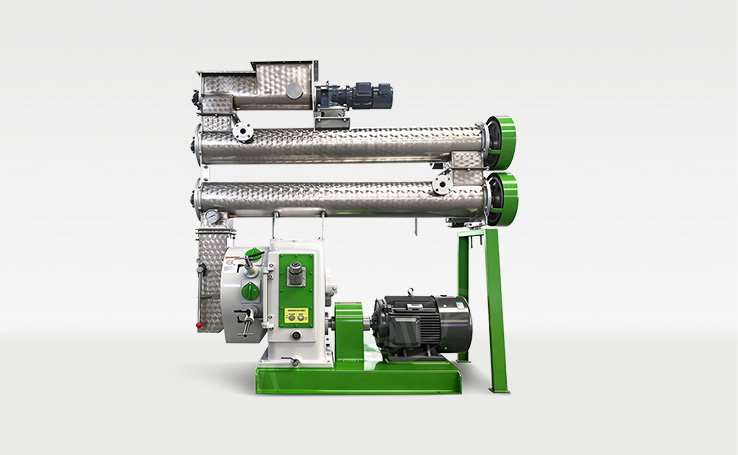
A cattle feed pellet mill machine may process formulas containing grain, forage, alfalfa, premix, and other ingredients. Fibrous materials can behave differently from finely ground grains, which means the feeding system should be designed appropriately.
Some cattle feed systems use forced feeding arrangements to help move lighter or fibrous material into the pelletizing chamber. Anti-bridging or anti-arching devices can also help when materials have poor flow characteristics.
The formula and raw material preparation should therefore be considered before selecting the pellet mill.
Conditioning and Process Stability
Conditioning is another stage where process control can improve consistency. Steam and feed mash need to be combined effectively before the material enters the pelletizing chamber.
Stable conditioning can support better pellet formation and reduce fluctuations caused by changes in moisture or temperature. Automated monitoring can help operators observe process conditions and make adjustments when necessary.
Automation does not eliminate the need for experienced operators. Instead, it gives them better information and more consistent control.
Integrating the Whole Line
The greatest benefit of automation often appears when several machines are integrated into one system.
The grinder should supply enough prepared material for the mixer. The mixer should provide a consistent blend to the pellet mill. The pellet mill should operate at a rate that matches the cooler and screening system.
If one machine stops, the control system can help prevent unnecessary accumulation of material in other sections. This is especially useful in commercial plants where continuous production is important.
Operators can this link to explore related equipment information and understand how different machines work together within a feed production system.
Monitoring Production Performance
Automation can also support production monitoring. Operators can observe machine status, motor loads, feeding rates, and other operating conditions from a centralized control interface.
Data from production can be useful when identifying recurring problems. For example, if output repeatedly falls during a particular formula, operators can investigate grinding, mixing, conditioning, or feeding conditions rather than assuming the pellet mill itself is responsible.
This approach supports more systematic maintenance and troubleshooting.
Automation Should Match the Project
Not every feed factory needs the same degree of automation. A small operation may only need automatic feeding and basic control, while a large commercial plant may benefit from automated weighing, batching, conveying, pelleting, cooling, packing, and centralized monitoring.
Investment should therefore be based on production requirements rather than technology for its own sake.
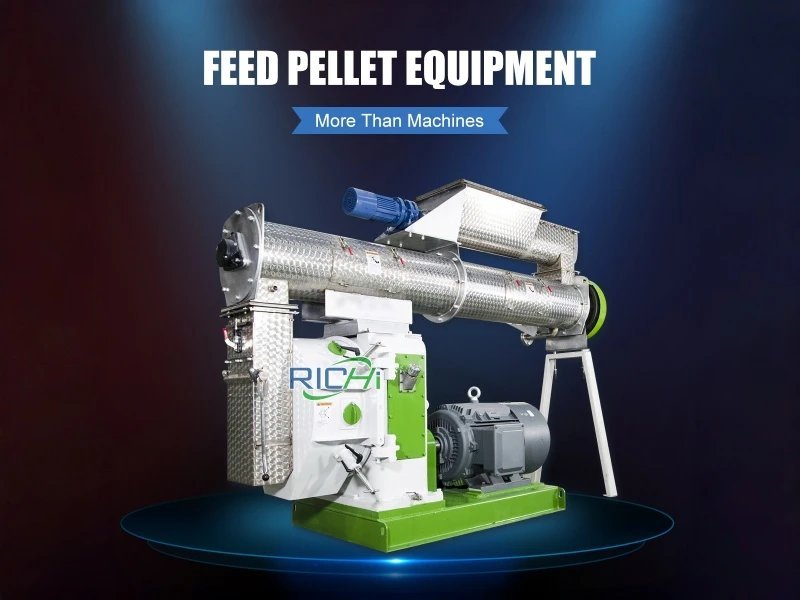
Richi Pelletizer equipment can be incorporated into feed processing systems with different levels of automation. The final configuration can be adapted according to production capacity, raw materials, pellet size, and factory requirements.
The Long-Term Advantage
Automation can reduce repetitive manual work, improve process consistency, and help operators identify problems earlier. It can also make it easier to maintain records of production performance.
However, automation works best when the mechanical equipment and process design are already properly matched. A sophisticated control system cannot compensate for an incorrectly sized grinder, mixer, pellet mill, or cooler.
For this reason, successful automation begins with sound engineering. Once the equipment capacities and process sequence are correctly designed, automation can provide an additional layer of control that supports stable, efficient feed production.
view details: https://www.richimanufacture.com/animal-feed-pellet-machine-for-sale/