



Bamboo processing creates value long before a finished product reaches the customer.
Furniture manufacturers turn bamboo into panels and furniture. Construction companies use bamboo for structural materials. Craft manufacturers transform bamboo into decorative products. Food processors may use bamboo in different ways.
Yet behind these industries is another material stream that often receives less attention: processing waste.
Branches, strips, shavings, sawdust, broken sections, and rejected pieces may accumulate every day.
For companies producing large amounts of bamboo waste, disposal is not simply a housekeeping issue. It can represent a recurring cost and a missed business opportunity.
Pelletizing offers a way to reconsider this waste.
Waste Can Become a Feedstock
The word “waste” can sometimes be misleading.
A material may have little value in its current form but become commercially useful after processing.
Loose bamboo residues are a good example.
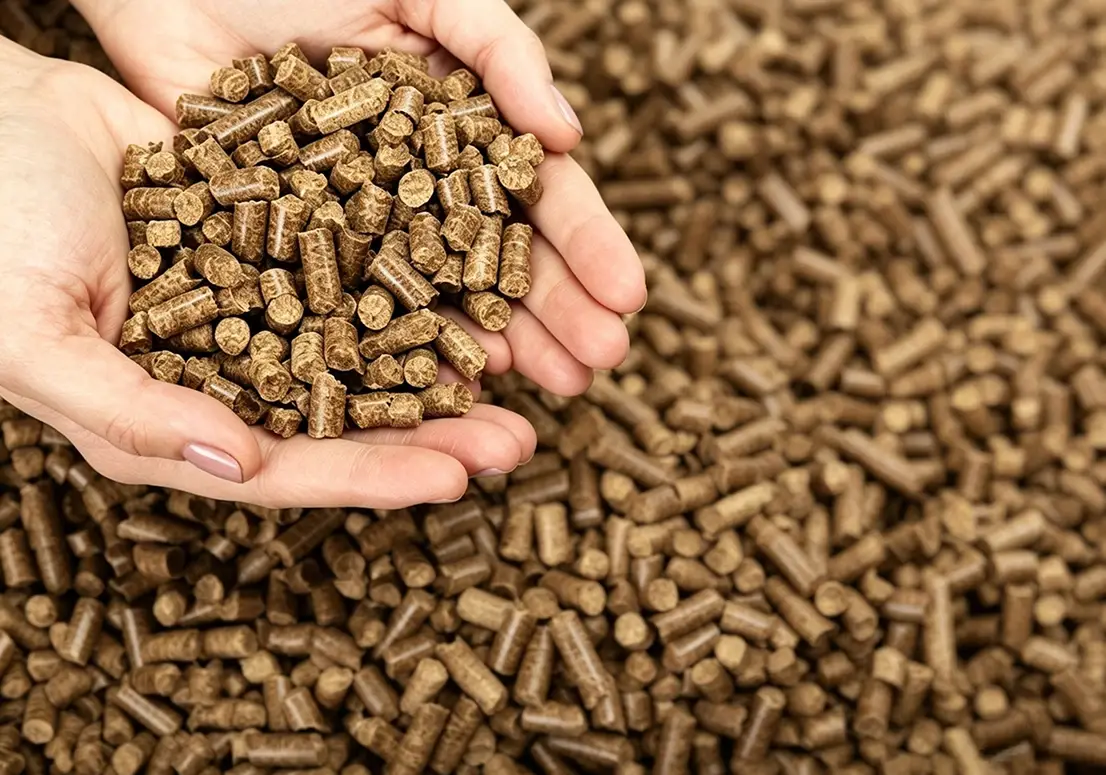
They can be difficult to transport efficiently because of their low bulk density and irregular shape. After size reduction and compression, however, the same material can become a standardized pellet.
This transformation changes several characteristics simultaneously:
- Bulk density increases
- Handling becomes easier
- Storage becomes more organized
- Transportation efficiency improves
- Automated feeding becomes easier
This is one reason biomass pellet production continues to attract interest.
The First Challenge: Irregular Raw Materials
Bamboo is structurally different from ordinary sawdust.
Large bamboo pieces can be long, fibrous, and difficult to feed directly into downstream equipment.
That is why a reliable size-reduction stage is essential for many projects.
A chipper can convert large bamboo sections into manageable chips, while a crusher can reduce the chips further.
For industrial projects, an industrial bamboo chipping machine for sale can become an important part of the preparation line rather than simply an optional machine.
The exact configuration should depend on the incoming material.
Designing Around the Factory’s Existing Waste
One advantage of bamboo processing companies is that they may already have a consistent residue stream.
Instead of purchasing biomass from outside suppliers, a factory can potentially use its own waste as the raw material for pellet production.
This can create an interesting circular business model.
For example:
Bamboo plantation → Bamboo processing → Finished products → Processing residues → Pellet production → Biomass fuel market
In this model, pellet production becomes a secondary utilization pathway.
The company can potentially generate additional value from material that previously required disposal.
When Is Pelletizing Economically Interesting?
The economics depend on several variables.
Raw Material Cost
The cheapest feedstock is not always the best feedstock. Transportation and preparation costs also matter.
A free residue located 300 kilometers away may be less attractive than a low-cost residue available next to the factory.
Moisture
Wet biomass costs more to transport and may require drying.
Processing
If the bamboo requires multiple stages of size reduction, electricity and maintenance costs increase.
Capacity
The pellet production line should be large enough to process available residues but not so large that equipment remains underutilized.
Selling Price
The final product must have a market value that supports the total operating cost.
These factors should be evaluated together.
The Importance of Pellet Density
One of the advantages of pelletizing is that loose biomass becomes much denser.
However, density should not be considered independently of durability.
A pellet that is extremely dense but easily breaks during handling may not be commercially attractive.
The production process should therefore aim for a balance between density, durability, moisture, and energy consumption.
A suitable bamboo pellet machine for sale should be selected according to the desired product characteristics rather than simply the lowest purchase price.
Fuel Applications
Bamboo pellets can potentially be used in biomass heating systems and industrial combustion applications where appropriate.
Possible users include:
- Food processing factories
- Agricultural dryers
- Commercial heating facilities
- Biomass boiler operators
- Manufacturing plants
- Fuel distributors
The suitability of bamboo pellets depends on the combustion system and fuel specifications.
Ash content, moisture, pellet size, and other fuel properties should be evaluated before entering a specific market.
The Hidden Value of Consistency
Commercial buyers generally prefer predictable products.
A fuel customer does not want every shipment to have a completely different moisture level or pellet size.
Consistency can therefore become a competitive advantage.
A stable production process requires controlled:
- Raw material preparation
- Particle size
- Moisture
- Feeding rate
- Pelletizing conditions
- Cooling
- Screening
- Packaging
This is why the supporting machinery around the pellet mill can be just as important as the pellet mill itself.
Why Cooling and Screening Matter
Fresh pellets can be hot and relatively fragile.
Cooling allows the pellets to stabilize before storage.
Screening removes excessive fines and broken particles.
These two stages may seem secondary compared with pelletizing, but they have a direct influence on the appearance and handling quality of the final product.
A well-designed production line therefore treats pelletizing, cooling, and screening as connected processes.
Flexible Biomass Production
A bamboo-based plant does not necessarily need to process bamboo exclusively.
Depending on equipment design and market strategy, producers may consider other woody residues.
Sawdust, wood chips, agricultural residues, and similar materials may sometimes be suitable.
For example, a 1-4 T/H wood chip pellet machine for sale can be relevant to businesses that want to create a flexible biomass pellet operation rather than a bamboo-only factory.
However, different materials should be tested before assuming that identical settings will produce identical results.
The Role of Automation
As production increases, automation can reduce labor requirements and improve process consistency.
An automated system may control:
- Raw material feeding
- Conveyor operation
- Pellet mill loading
- Cooling airflow
- Screening
- Packing
- Alarm systems
Centralized controls can also make it easier for operators to identify problems.
Automation does not mean removing people from the process. Instead, it shifts operators from repetitive manual handling toward monitoring and process management.
What Should a Small Factory Prioritize?
A small bamboo processor may not need every advanced feature from the beginning.
A practical priority list could be:
- Reliable raw material preparation
- Stable pelletizing
- Appropriate moisture control
- Simple material handling
- Easy maintenance
- Basic quality monitoring
- Expandable production capacity
This approach allows the business to control investment while keeping future expansion possible.
Can Bamboo Pellets Support a Circular Economy?
Yes, when the entire system is properly designed.
The circular economy concept is not simply about recycling. It is about keeping resources productive for as long as possible.
A bamboo processing facility that converts its own residues into energy products is extending the value of the original raw material.
The concept can also reduce dependence on external disposal services.
In some locations, the pellets may even be consumed locally, creating a relatively short resource-to-energy cycle.
A Business Model Built Around Local Resources
One of the strongest characteristics of biomass businesses is their dependence on geography.
Unlike digital products, biomass cannot be shipped infinitely without increasing costs.
Therefore, successful pellet businesses often develop close relationships with local feedstock suppliers and fuel customers.
A bamboo processing cluster can be particularly interesting because multiple factories may generate residues in the same region.
Instead of each factory handling its own waste independently, a centralized pellet facility could potentially collect suitable residues from several sources.
Questions to Ask Before Ordering Equipment
Investors should ask several practical questions before finalizing a project:
- What is the average daily bamboo residue volume?
- Is the feedstock seasonal?
- What is the moisture range?
- What is the largest incoming particle size?
- How far must the raw material be transported?
- What pellet diameter does the market require?
- Will the pellets be sold in bags or bulk?
- Is drying required throughout the year?
- Can alternative biomass be used?
- How many hours per day will the plant operate?
These questions can reveal problems before construction begins.
Additional technical helpful resources can also support preliminary research, but laboratory or pilot testing is preferable when raw material behavior is uncertain.
A New Perspective on Bamboo
The bamboo industry is usually evaluated through the products it sells.
However, its residues deserve attention too.
A branch that is too small for furniture production still contains biomass energy. A piece rejected during processing still contains fiber. Sawdust generated during cutting still represents stored chemical energy.
Pelletizing provides a mechanism for converting these materials into a more standardized product.
The opportunity is therefore not merely to build another pellet factory.
It is to integrate energy recovery into the existing bamboo value chain.
For businesses with stable bamboo residues, this approach can reduce waste, improve resource efficiency, and potentially create a secondary revenue stream.
The best projects will combine practical engineering with realistic market planning. When raw materials, equipment, capacity, logistics, and customers are aligned, bamboo waste can become far more valuable than its original appearance suggests.