

There’s a number that every poultry farmer knows. It’s the feed conversion ratio. It tells you how many pounds of feed it takes to produce a pound of meat. When that number goes up, profits go down. When it goes down, profits go up. Simple math.
The feed conversion ratio is the result of many factors. Genetics. Environment. Health. Management. But the feed itself—the physical form of the feed—is one of the most significant factors. Birds that eat consistent, high-quality pellets convert feed more efficiently than birds that eat inconsistent mash or crumble.
Here’s the challenge. Commercial feed is produced in large batches. It’s formulated for the average flock. The quality varies from batch to batch. The pellets might be harder in one load, softer in the next. The particle size might change. The uniformity might be inconsistent.
These variations affect the birds. A small change in pellet hardness can reduce feed intake. A change in particle size can affect digestibility. A change in uniformity can lead to uneven growth. The feed conversion ratio drifts up, and profits drift down.
The Variable That’s Costing You
Poultry feed production has a hidden variable: the equipment used to produce it. The die wears over time. The rollers lose their profile. The conditioning system may not maintain consistent temperature. The control system may drift.
Each of these variables affects the final product. A worn die produces pellets with inconsistent density. Inconsistent conditioning affects pellet durability. A control system that’s out of calibration produces pellets that are too hard or too soft.
The birds respond to these changes. They eat less when the pellets are too hard. They waste more when the pellets are too soft. They grow unevenly when the feed quality fluctuates. The impact on feed conversion is real.
What You Can Control
On-site feed production eliminates many of these variables. The equipment is set up for your specific operation. The maintenance schedule is under your control. The quality checks are done by your team.
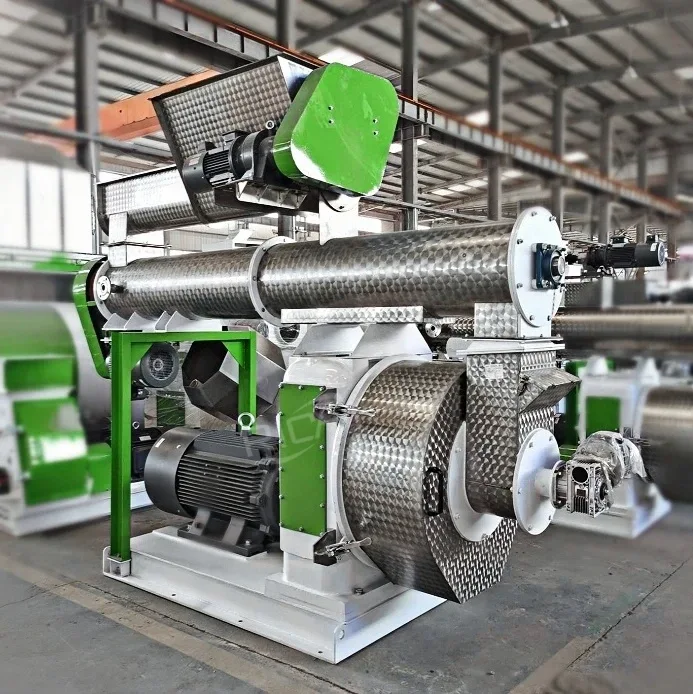
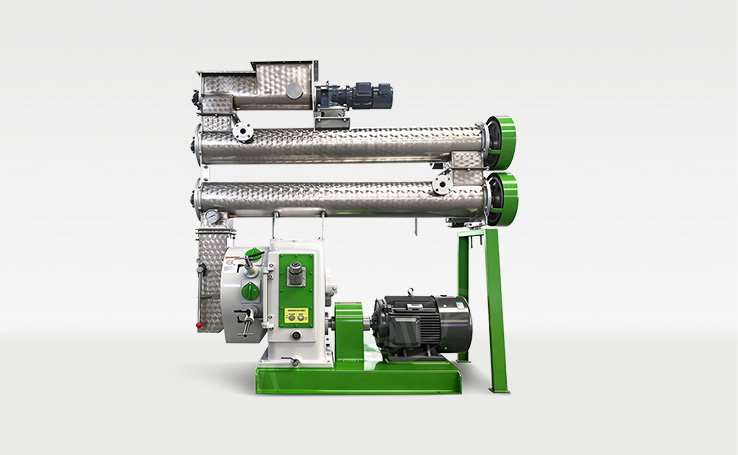
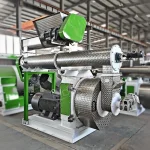
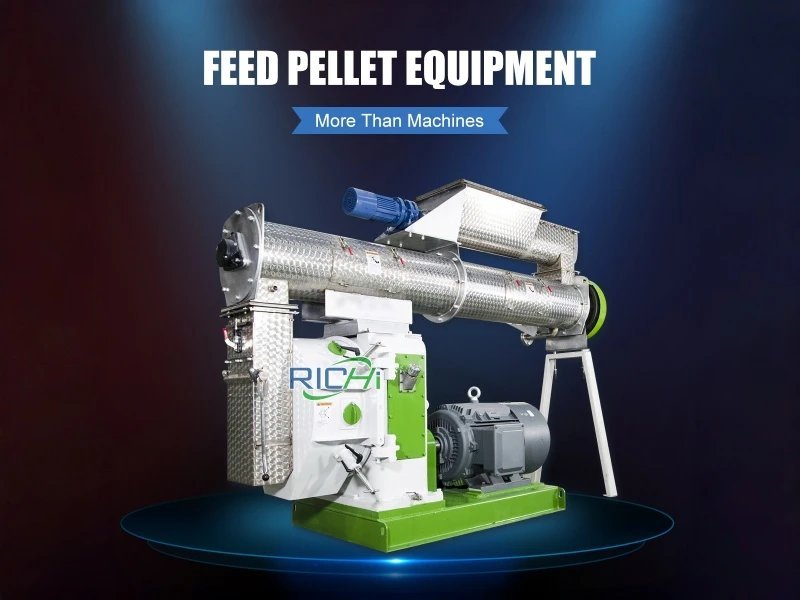
A chicken feed pellet making machine gives you the ability to produce consistent pellets on your schedule. You control the grind, the mix, the conditioning, and the pelleting. The feed that goes into the feeder is the same batch after batch.
The machine grinds the ingredients to a consistent particle size. The mixing ensures uniform distribution. The conditioning prepares the material for pelleting. The compression through the die creates pellets of uniform density.
The birds get the same quality feed every day. The feed conversion ratio stabilizes. The growth is consistent. The performance is predictable.
The Technology
An automatic poultry feed pellet making machine takes consistency to another level. The sensors monitor temperature, pressure, and feed rate. The control system adjusts parameters in real time. The output is consistent regardless of variations in the incoming material.
The automatic machine reduces the labor requirement. The operator sets the parameters and monitors the system. The machine manages the rest. The result is better consistency than a manual system can achieve.
The automation also improves safety. The system detects conditions that could lead to equipment damage or operator injury. The machine shuts down when necessary. The operator is protected.
The Quality Check
Quality control is essential for consistent feed. The incoming ingredients should be tested for moisture content and quality. The grinding process should be checked for particle size. The mixing should be verified for uniformity.
During pelleting, the conditioning temperature should be monitored. The pellet durability should be tested regularly. The pellet size should be checked.
The finished pellets should be tested for moisture content, durability, and nutrient composition. The fines content should be measured. The appearance should be consistent.
The Impact
The impact of consistent feed on flock performance is measurable. Feed conversion improves. Growth becomes more uniform. Mortality decreases. The results are visible in the production numbers.
The investment in a feed pellet machine for poultry feed is justified by the improved performance and reduced feed costs. For many operations, the equipment pays for itself within two to three years.
The technology is proven. The equipment is available. The support is accessible. For poultry producers looking to improve their operations, on-site feed production offers a practical path. The variable that’s costing you can be controlled—if you choose to control it.
The feed is the largest cost in poultry production. The consistency of the feed affects the performance of the flock. The right machine, properly operated, can change the numbers.
Related post:https://pelletizerextruder.com/chicken-feed-pellet-mill/