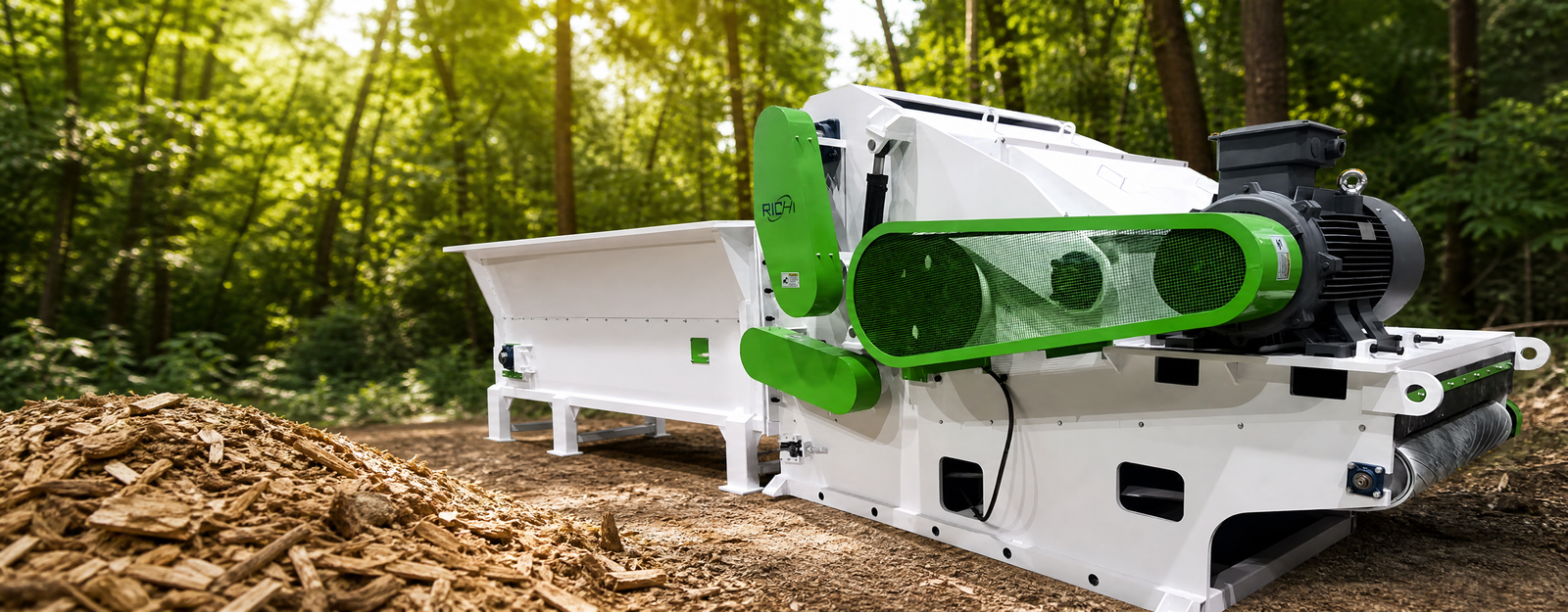


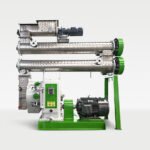
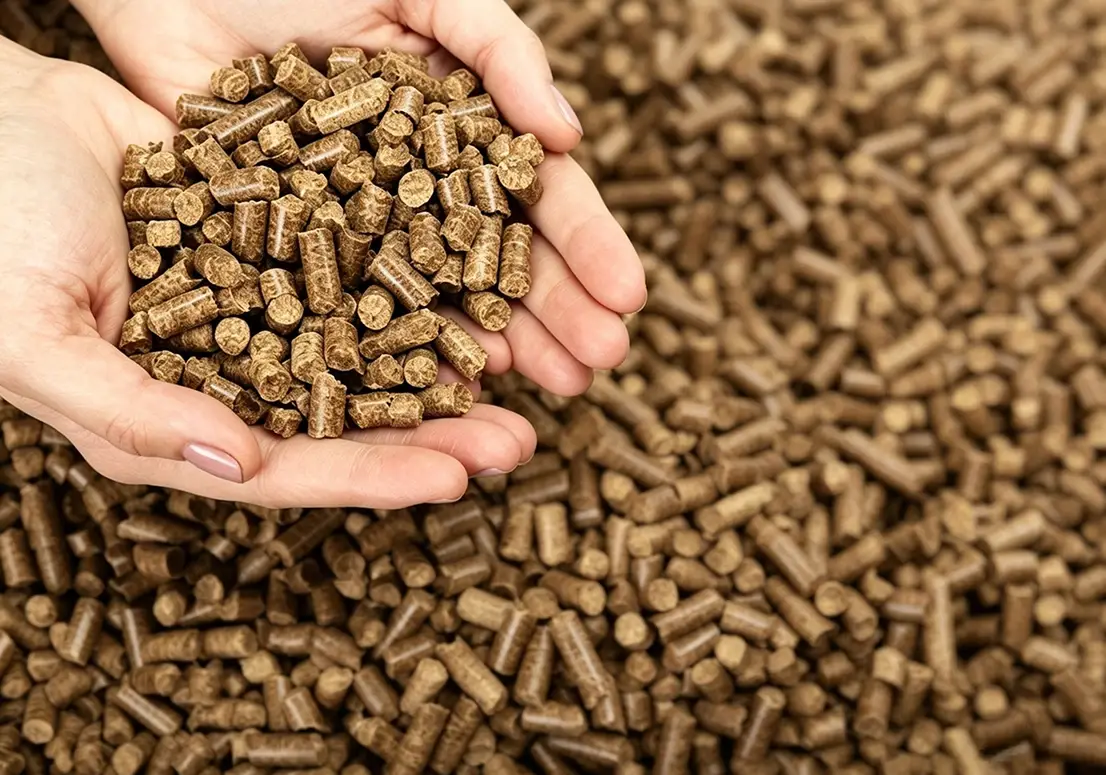
Straw pelletizing is an effective way to convert agricultural residues into a denser and easier-to-handle biomass product. Wheat straw, rice straw, corn stalks, barley straw, oat straw, sorghum stalks, and other crop residues can be processed into pellets for biomass fuel and other applications.
However, building an efficient straw pelletizing system requires much more than purchasing a pellet mill. The complete production process must be designed around the characteristics of the raw material, including moisture, fiber length, particle size, bulk density, contamination, and seasonal availability.
A properly designed system connects raw material receiving, cleaning, bale breaking, shredding, drying, grinding, feeding, pelletizing, cooling, screening, conveying, and packaging into one coordinated process.
The straw pelleting machine is the core equipment, but its performance depends heavily on the equipment installed before and after it. If the straw is too wet, too coarse, contaminated, or poorly fed, even a high-quality pellet machine may not achieve stable production.
This article explains how to build an efficient straw pelletizing system, what equipment is required, how to optimize each stage, and which factors should be considered before investing in a complete production line.
What Makes a Straw Pelletizing System Efficient?
An efficient straw pelletizing system should achieve several objectives at the same time.
It should:
- Process raw materials consistently
- Maintain stable production
- Produce uniform pellets
- Minimize unnecessary energy consumption
- Reduce material losses
- Protect critical equipment
- Reduce downtime
- Control dust
- Support convenient maintenance
- Provide stable finished-product quality
Efficiency is therefore not simply measured by the rated capacity of the pellet mill.
A plant producing more pellets per hour is not necessarily more efficient if it consumes excessive energy, generates large quantities of fines, or experiences frequent breakdowns.
The best system balances capacity, energy consumption, pellet quality, equipment durability, automation, and operating cost.
Step 1 Define the Raw Material
The first step in designing a straw pelletizing system is identifying the actual raw material.
Common agricultural residues include:
- Wheat straw
- Rice straw
- Corn stalks
- Barley straw
- Oat straw
- Sorghum stalks
- Cotton stalks
- Rapeseed straw
- Grass residues
Different materials behave differently during processing.
Before equipment selection, the following characteristics should be tested:
- Moisture
- Fiber length
- Particle size
- Bulk density
- Ash content
- Contamination
- Storage condition
- Seasonal variation
A production line designed for dry wheat straw may not perform identically with wet rice straw or coarse corn stalks.
Step 2 Determine the Required Capacity
Production capacity is one of the most important design parameters.
A small agricultural operation may require a relatively modest production line, while a commercial biomass fuel plant may need several tons per hour.
Capacity affects the selection of:
- Bale breaker
- Shredder
- Dryer
- Hammer mill
- Feeder
- Straw pelleting machine
- Cooler
- Screen
- Conveyors
- Packing equipment
All equipment should be matched.
For example, if the pellet mill can produce 5 tons per hour but the dryer can only supply 3 tons per hour of properly dried straw, the actual production capacity of the line will be limited by the dryer.
This is why line balancing is essential.
Step 3 Design an Efficient Raw Material Receiving System
Raw material receiving is the starting point of the production line.
Straw may arrive as:
- Large square bales
- Round bales
- Small bales
- Loose straw
The receiving system should be designed according to the actual supply method.
For baled straw, the system may include:
Truck Unloading → Bale Storage → Bale Conveyor → Bale Breaker
For loose straw, the receiving system may use conveyors or feeding hoppers.
A well-designed receiving system should reduce manual handling and provide continuous material flow.
Step 4 Install Cleaning Equipment
Agricultural straw can contain foreign materials.
These may include:
- Stones
- Soil
- Sand
- Metal
- Plastic
- Twine
- Other crop residues
Cleaning equipment should be installed before major size-reduction equipment when contamination is significant.
A cleaning screen can remove unsuitable particles, while a magnetic separator can help remove ferrous metal.
Why Cleaning Improves Efficiency
Foreign materials can damage:
- Shredders
- Hammer mills
- Dies
- Rollers
- Conveyors
Removing contaminants helps reduce unexpected downtime and maintenance.
It can also improve the quality of the finished pellets.
Step 5 Use a Bale Breaker
Baled straw is highly compressed.
A bale breaker loosens the bale and separates the straw into smaller pieces.
This provides several benefits.
It:
- Improves material flow
- Reduces manual labor
- Prepares straw for shredding
- Helps stabilize feeding
- Protects downstream equipment from oversized material
For large plants, automatic bale breaking can significantly improve the continuity of the production process.
Step 6 Use a Straw Shredder
After bale breaking, long straw fibers may still be present.
A shredder reduces the length of these fibers.
This is particularly important for:
- Wheat straw
- Rice straw
- Corn stalks
- Barley straw
- Oat straw
Long fibers can wrap around shafts, bridge inside hoppers, and create unstable feeding.
The shredder prepares the material for more efficient fine grinding.
Step 7 Control Straw Moisture
Moisture is one of the most important factors affecting pelletizing.
If straw is too wet, it may cause:
- Poor pellet formation
- High motor load
- Die blockage
- Lower durability
- Increased drying costs
- Difficult cooling
If it is excessively dry, it may produce more dust and may also cause unstable pellet formation.
In many biomass applications, a moisture range around 10% to 15% can be used as an initial reference, but the actual optimum depends on the material and pelletizing equipment.
Step 8 Install a Proper Straw Dryer
If the incoming straw contains excessive moisture, a dryer is required.
A rotary dryer is commonly used for commercial biomass pellet production.
Dryer selection should be based on:
- Initial moisture
- Target moisture
- Material throughput
- Particle size
- Heat source
- Operating hours
The dryer should be capable of supplying the pellet mill with stable material at the required moisture level.
Avoid Over-Drying
More drying is not always better.
Removing unnecessary water increases thermal energy consumption.
The objective is to achieve a suitable moisture condition rather than maximum dryness.
Step 9 Use an Appropriate Grinding System
After shredding and drying, straw usually needs further size reduction.
A hammer mill is commonly used.
Grinding improves the uniformity of the feedstock and helps the pellet mill compress the material more effectively.
However, grinding too finely can waste electricity and increase dust.
The correct particle size should be selected according to:
- Straw type
- Pellet diameter
- Die design
- Compression ratio
- Required pellet quality
Step 10 Add a Buffer Hopper
A buffer hopper between the grinding section and pellet mill can improve system stability.
It provides temporary material storage and absorbs short-term fluctuations in upstream production.
For example, if the grinder experiences a brief variation in output, the buffer hopper can continue supplying material to the pellet mill.
This helps maintain stable production.
Step 11 Use Controlled Feeding
A stable feeding system is essential for pelletizing efficiency.
The feeder should supply material at a controlled rate.
Depending on the system, it may use:
- Screw feeders
- Belt feeders
- Variable-frequency drives
- Automatic level sensors
The goal is to prevent both underfeeding and overfeeding.
Underfeeding
Underfeeding may reduce output and create unstable pellet formation.
Overfeeding
Overfeeding can increase motor load and potentially cause blockage or overload.
Automatic feeding control can therefore improve both productivity and machine protection.
Step 12 Select the Right Straw Pelleting Machine
The pellet mill is the core of the production system.
A straw pelleting machine compresses prepared biomass through a die to form pellets.
(Learn more:https://richipelletizer.com/straw-pellet-machine-for-sale/)
For larger commercial plants, ring die pellet mills are commonly used because they are designed for continuous production.
Important Pellet Mill Selection Factors
Consider:
- Capacity
- Motor power
- Pellet diameter
- Die compression ratio
- Roller design
- Wear resistance
- Lubrication
- Safety protection
- Feeding system
- Automation
- Maintenance requirements
The machine should be selected according to the actual raw material rather than simply choosing the model with the highest nominal capacity.
Step 13 Select the Correct Die
The die controls pellet diameter and contributes to compression resistance.
Different straw types may require different die compression ratios.
A die that is too restrictive can increase:
- Motor load
- Energy consumption
- Roller and die wear
A die with insufficient resistance may produce pellets with poor density or durability.
Therefore, die selection should be based on actual material testing.
Step 14 Maintain Proper Roller Condition
The rollers work together with the die to compress straw.
Their condition affects:
- Compression efficiency
- Pellet formation
- Production stability
- Energy consumption
Important maintenance tasks include:
- Checking roller wear
- Adjusting roller clearance
- Inspecting bearings
- Maintaining lubrication
- Checking alignment
Worn rollers should be replaced or serviced according to equipment requirements.
Step 15 Use an Efficient Cooling System
Fresh pellets leave the pellet mill hot.
They also contain residual moisture.
A cooler removes heat and stabilizes the pellets before screening and packaging.
Counterflow coolers are commonly used in industrial pellet production.
Why Cooling Improves Efficiency
Proper cooling can:
- Improve pellet durability
- Reduce breakage
- Improve storage stability
- Prepare pellets for screening
- Reduce condensation risk during packaging
Cooling capacity should match pellet mill output.
An undersized cooler can become a bottleneck.
Step 16 Screen the Finished Pellets
After cooling, pellets should normally pass through a vibrating screen.
The screen separates:
- Finished pellets
- Fines
- Broken pellets
- Oversized particles
Suitable fines can often be returned to the pelletizing process.
This recycling can reduce material loss.
Screening also improves the consistency of the finished product.
Step 17 Design Efficient Conveying Systems
Material needs to move continuously between processing stages.
Common equipment includes:
- Belt conveyors
- Screw conveyors
- Bucket elevators
- Chain conveyors
The conveying system should minimize unnecessary transfer points.
Too many transfer points can increase:
- Energy consumption
- Material loss
- Dust
- Pellet breakage
A good plant layout uses short and logical material paths wherever practical.
Step 18 Install an Appropriate Packing System
Finished pellets may be sold in bags or transported in bulk.
Packing options include:
- Small bags
- Medium bags
- Large bags
- Bulk loading
Automatic weighing and packing systems can improve efficiency and reduce labor.
For large-scale plants, automated packaging can also improve product consistency.
Step 19 Design Dust Collection
Straw processing can produce dust during:
- Bale breaking
- Shredding
- Grinding
- Conveying
- Screening
A dust collection system may include:
- Dust hoods
- Ducts
- Fans
- Cyclones
- Bag filters
- Collection units
The system should be designed together with the production line and according to applicable local safety requirements.
Step 20 Automate the Production Line
Automation can significantly improve operating consistency.
A centralized control system can monitor:
- Motor load
- Feeding rate
- Dryer conditions
- Pellet mill operation
- Cooler operation
- Conveyor status
- Alarms
- Emergency shutdowns
Variable-frequency drives can adjust the speed of selected equipment.
Sensors can provide information about:
- Hopper level
- Temperature
- Material flow
- Motor current
Automation does not eliminate the need for skilled operators, but it can make the production process easier to monitor and control.
How to Reduce Energy Consumption
Energy efficiency is an important part of system design.
The major energy-consuming stages may include:
- Drying
- Grinding
- Pelletizing
- Conveying
Optimize Drying
Do not dry the material more than necessary.
Use a heat source and dryer configuration appropriate for the moisture removal requirement.
Optimize Grinding
Avoid unnecessarily fine particle sizes.
Optimize Pelletizing
Use an appropriate die compression ratio and maintain roller condition.
Reduce Conveying Distance
Efficient plant layout can reduce unnecessary material movement.
Monitor Energy Consumption
Track electricity and thermal energy consumption by processing stage where practical.
This can help identify bottlenecks and inefficiencies.
How to Improve Pellet Quality
An efficient system must produce a consistent product.
Important quality factors include:
- Pellet diameter
- Pellet length
- Moisture
- Bulk density
- Durability
- Fines content
- Ash content
- Heating value
Pellet quality depends on the entire process.
Good quality cannot be achieved by changing only the pellet mill settings if the raw material is inconsistent.
How to Handle Different Straw Types
A flexible plant should account for different raw materials.
Wheat Straw
Wheat straw is fibrous and may require shredding and grinding.
Rice Straw
Rice straw may require careful contamination control and ash management.
Corn Stalks
Corn stalks are often relatively coarse and may require strong size reduction.
Barley and Oat Straw
These can generally be processed through similar preparation stages, but actual operating parameters should be tested.
If a plant processes multiple materials, the equipment should be selected with sufficient flexibility.
Design the Factory Layout Carefully
Plant layout can have a major influence on efficiency.
A logical layout may follow:
Raw Material Storage
↓
Cleaning
↓
Bale Breaking
↓
Shredding
↓
Drying
↓
Grinding
↓
Buffer Storage
↓
Pelletizing
↓
Cooling
↓
Screening
↓
Packing
↓
Finished Product Storage
This arrangement minimizes unnecessary material movement.
The factory layout should also provide sufficient space for:
- Equipment maintenance
- Spare parts
- Operator access
- Material storage
- Finished product storage
- Safety pathways
Plan Raw Material Storage
An efficient production line needs a reliable raw material supply.
Straw should be protected from excessive rain and moisture.
Storage planning should consider:
- Seasonal harvest periods
- Daily consumption
- Storage capacity
- Moisture protection
- Fire prevention
- Transportation access
Large projects may need substantial storage capacity to maintain production outside the harvest season.
Plan Finished Pellet Storage
Finished pellets should be stored in a dry environment.
Storage areas should protect the product from:
- Rain
- Groundwater
- Excessive humidity
- Physical damage
Proper storage helps maintain pellet durability and reduces product loss.
Build Preventive Maintenance Into the System
Efficiency depends on equipment availability.
A preventive maintenance plan should include regular inspection of:
- Pellet mill die
- Rollers
- Bearings
- Gearbox
- Motors
- Hammer mill screens
- Dryer components
- Conveyors
- Coolers
- Dust collection system
Maintenance should be scheduled according to operating hours and manufacturer requirements.
Replacing a worn component before it causes a major failure can reduce unexpected downtime.
Common Mistakes When Building a Straw Pelletizing System
Choosing Equipment Only by Rated Capacity
Rated capacity does not always represent actual production under every raw material condition.
Ignoring Moisture Variation
Seasonal changes can significantly affect raw material moisture.
Installing an Undersized Dryer
A dryer that cannot handle the required moisture removal can restrict the entire plant.
Grinding Too Fine
Excessive grinding increases electricity consumption without necessarily improving pellet quality.
Using an Inappropriate Die
Incorrect compression can cause poor pellet quality or excessive energy consumption.
Ignoring Downstream Capacity
The cooler, screen, and packaging system must handle the pellet mill output.
Underestimating Dust Control
Dust should be considered during initial plant design.
How to Evaluate a Straw Pelletizing Project
Before investing, prepare a detailed project assessment.
The assessment should include:
Raw Material
What type of straw is available?
Supply
How much straw is available throughout the year?
Moisture
What is the typical and seasonal moisture range?
Capacity
How many tons per hour are required?
Product
What pellet diameter and quality are required?
Energy
What electricity and heat sources are available?
Market
Who will buy the finished pellets?
Logistics
How far must raw materials and finished products be transported?
Factory
What space and utilities are available?
These factors help determine the appropriate equipment configuration.
Example of an Efficient Straw Pelletizing System
A commercial straw pellet plant could be configured as:
Straw Receiving System
→
Cleaning Screen
→
Magnetic Separator
→
Bale Breaker
→
Straw Shredder
→
Rotary Dryer
→
Hammer Mill
→
Buffer Hopper
→
Automatic Feeder
→
Straw Pelleting Machine
→
Pellet Cooler
→
Vibrating Screen
→
Automatic Packing Machine
→
Finished Pellet Storage
A dust collection system and centralized electrical control system can support the entire process.
The actual configuration should be customized according to raw material testing and project requirements.
Frequently Asked Questions
What is the most important machine in a straw pelletizing system?
The pellet mill is the core pellet-forming machine, but efficient production requires a properly designed system around it. Drying, grinding, feeding, cooling, and screening all influence pellet mill performance.
How do I choose a straw pelleting machine?
Consider the straw type, moisture, required capacity, pellet diameter, particle size, die compression ratio, motor power, wear resistance, automation, and maintenance requirements.
Does every straw pellet plant need a dryer?
No. A dryer is mainly required when the incoming straw contains excessive moisture. Drying requirements should be determined through raw material testing.
Why is a bale breaker necessary?
It loosens compressed straw bales and creates a more manageable material flow for shredding and grinding.
Can one pellet mill process different types of straw?
A suitable pellet mill can potentially process different agricultural residues, but the die, moisture, particle size, and operating parameters may need to be adjusted.
What causes low straw pellet production?
Potential causes include excessive moisture, poor grinding, unstable feeding, incorrect die selection, worn rollers, insufficient drying capacity, or bottlenecks elsewhere in the production line.
How can straw pellet quality be improved?
Control moisture, prepare consistent particle size, use the correct die compression, maintain rollers, stabilize feeding, cool pellets properly, and screen finished products.
How important is automation?
Automation can improve consistency, monitoring, and production management, particularly in medium- and large-scale plants. The appropriate automation level depends on project size and operating requirements.
(discover more info here: RICHI Pelletizer )
Conclusion
Building an efficient straw pelletizing system requires an integrated approach. The goal is not simply to install a high-capacity pellet mill, but to create a balanced production line in which every stage supports the next.
The complete process may include:
Raw Material Receiving → Cleaning → Bale Breaking → Shredding → Drying → Grinding → Moisture Adjustment → Buffer Storage → Controlled Feeding → Pelletizing → Cooling → Screening → Packaging
The straw pelleting machine is at the center of this system, but its performance depends on the quality and consistency of the prepared straw.
Efficient production starts with reliable raw materials. Proper cleaning protects equipment, shredding improves fiber handling, drying controls moisture, grinding creates suitable particle size, and controlled feeding provides stable material flow. After pelletizing, effective cooling and screening help create a more stable finished product.
Energy efficiency should also be considered at every stage. Avoid unnecessary drying and grinding, select an appropriate die compression ratio, maintain the pellet mill, minimize unnecessary conveying, and balance the capacities of all major machines.
For investors planning a commercial straw pellet project, the most effective approach is to evaluate the complete process from raw material collection to finished pellet storage. Raw material testing, production capacity, factory layout, equipment matching, energy supply, automation, maintenance, and final market requirements should all be considered before equipment selection.
A properly designed straw pelletizing system can turn agricultural residues into a consistent, compact biomass product while improving handling, storage, transportation, and production efficiency.