

Feed is one of the largest operating costs for livestock and aquaculture businesses. Yet when producers evaluate feed production, they often focus mainly on raw material prices and machine capacity. Pellet quality is sometimes treated as a secondary concern.
In reality, the physical characteristics of feed can influence storage, transportation, feeding behavior, nutrient utilization, and production efficiency.
A well-designed feed production process should therefore do more than simply turn powdered ingredients into pellets. It should create a consistent product that matches the nutritional and physical requirements of the target animal.
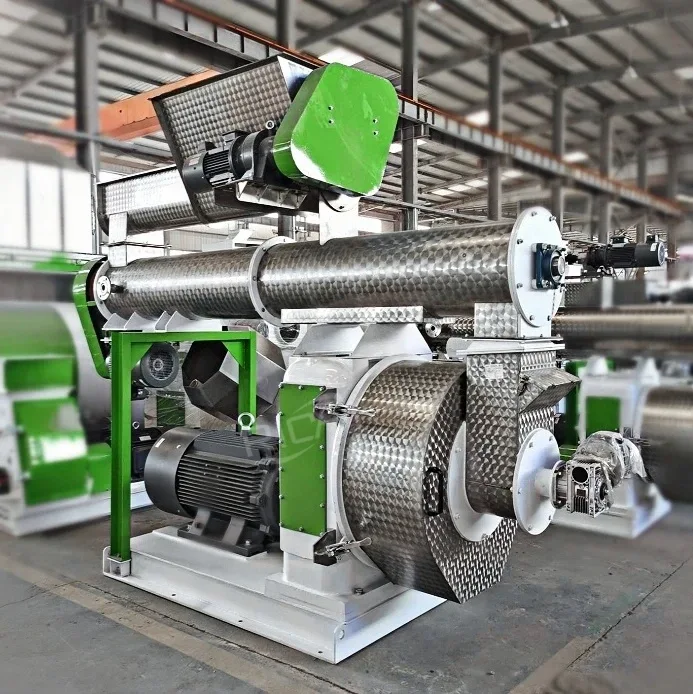
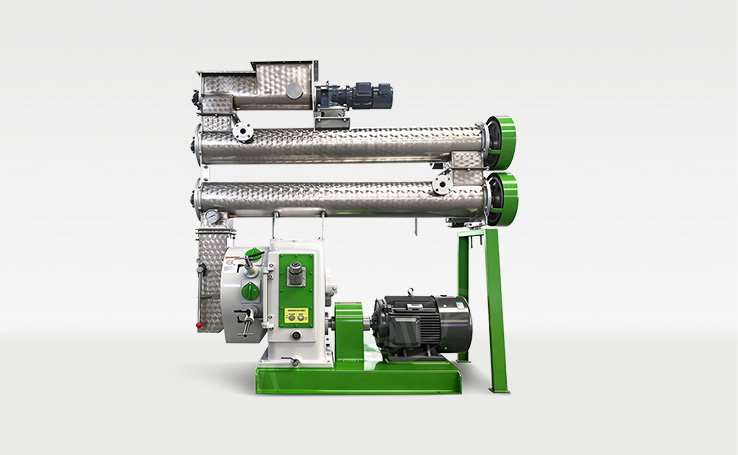
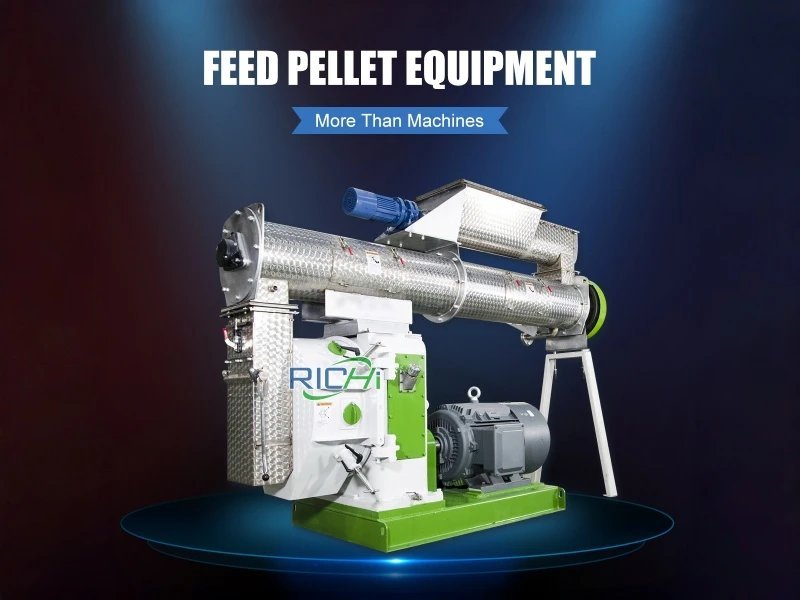
This is where modern animal feed granulator technology becomes increasingly valuable.
A pellet mill is only one part of a complete production system, but it plays an important role in determining pellet density, shape, durability, and output consistency. The final result depends on the interaction between formulation, particle size, moisture, conditioning, die design, pressure, and cooling.
For feed manufacturers planning to expand their production capacity, understanding these relationships can prevent many common operational problems.
From Raw Ingredients to a Consistent Feed Product
A typical feed manufacturing process may include raw material receiving, cleaning, grinding, batching, mixing, conditioning, pelletizing, cooling, screening, and packaging.
Each stage has a different purpose.
Grinding reduces particle size and creates a more uniform material for mixing and pelleting. If the particle size is inconsistent, the final pellet may have weak points or uneven density.
Mixing distributes ingredients throughout the feed formula. Protein sources, grains, minerals, vitamins, and other additives need to be evenly distributed so that every pellet represents the intended nutritional profile.
Conditioning then prepares the feed material for pellet formation. Moisture and heat can improve the binding characteristics of many feed ingredients while helping the material pass through the die more effectively.
Finally, pelletizing compresses the conditioned feed into a defined shape and diameter.
The process may look straightforward, but small variations can have a significant impact on the finished product.
Why Particle Size Deserves More Attention
Particle size is one of the most underestimated variables in feed production.
Large particles may create inconsistent pellet surfaces, while excessive fines can affect airflow, mixing performance, and feeding characteristics. Different animals also require different pellet sizes.
For example, rabbit feed commonly uses smaller pellets than some cattle feed products. Shrimp feed may require even finer particle sizes because of the feeding behavior and growth stages of aquatic animals.
This means a feed manufacturer should not select a pellet mill based solely on hourly output.
The die configuration and processing system should be matched with the intended feed product.
For a small rabbit operation, a 1-2 T/H rabbit pellet machine for sale may provide a more practical production scale than purchasing a large industrial machine that operates far below its intended capacity.
The right capacity can reduce unnecessary investment while maintaining sufficient production flexibility.
High-Fiber Ingredients Create Different Challenges
Not all feed formulas behave in the same way during pelletizing.
A formula containing corn, soybean meal, wheat bran, and mineral additives behaves differently from one containing a large proportion of alfalfa, hay, straw, or other fibrous ingredients.
High-fiber materials can affect material flow and compression. They may also require careful grinding and conditioning.
This is especially important for rabbit and ruminant feed because forage ingredients can represent a significant portion of the formula.
The objective is not necessarily to grind everything as finely as possible. Excessive grinding consumes additional energy and may not provide meaningful benefits. Instead, particle size should be selected according to the feed formula and final pellet requirements.
Why Conditioning Changes the Pelletizing Process
Conditioning is more than simply adding steam.
A properly designed conditioner gives moisture, heat, and mixing time to the feed material before it reaches the pelletizing chamber.
This can improve pellet formation and help achieve more stable production.
However, over-conditioning can also create problems. Excessive moisture may make the material difficult to compress properly or increase the energy required for downstream drying.
The optimal conditioning parameters depend on the ingredients, formula, pellet diameter, die compression ratio, and equipment configuration.
Therefore, experienced feed manufacturers usually treat conditioning as part of the overall pelletizing system rather than as an isolated machine component.
Shrimp Feed Requires Another Level of Precision
Aquaculture feed presents a different set of requirements.
Shrimp feed, for example, often needs small particle sizes and strong water stability. If pellets break apart too quickly in water, nutrients may be lost before shrimp consume them.
This creates a production challenge that is different from conventional livestock feed.
For a producer evaluating a 0.5-1.0 T/H shrimp feed pellet machine for sale, the key question should not simply be “How many tons per hour can the machine produce?”
Instead, the producer should ask:
- What shrimp species will be fed?
- What pellet diameters are required?
- Are different growth stages involved?
- How long should the feed remain stable in water?
- What raw materials will be used?
- Is ultra-fine grinding required?
- Will the plant produce only shrimp feed or several aquatic feed products?
These questions help determine the appropriate production process.
Capacity Should Follow the Business Model
A common mistake when planning a feed plant is choosing equipment based on an ambitious future production target rather than current demand.
A growing farm may not need a 10-ton-per-hour system immediately.
Starting with a moderate-capacity plant can provide several advantages:
- Lower initial investment.
- Easier raw material management.
- Simpler production control.
- Reduced risk of underutilized equipment.
- More manageable maintenance requirements.
As demand grows, additional production equipment or a larger pelletizing system can be introduced.
This approach can be particularly useful for agricultural cooperatives and regional feed suppliers.
The Role of Automation
Automation is not limited to large industrial feed factories.
Even small and medium plants can benefit from automated feeding, weighing, batching, temperature monitoring, and packaging.
The goal is not simply to eliminate labor. Automation also helps reduce variation between production batches.
A modern system can monitor material flow, adjust feeding rates, control conditioning parameters, and coordinate different sections of the production line.
For a manufacturer supplying several animal species, formula management can also become easier.
Equipment Is Only One Part of the Solution
A good pellet mill cannot compensate for poorly prepared raw materials.
If the ingredients contain excessive moisture, are inadequately ground, or are poorly mixed, even a high-quality pelletizing machine may struggle to produce consistent pellets.
This is why complete feed plants generally include multiple processing stages.
Grinding, mixing, pelleting, cooling, screening, and packaging should work as a coordinated system.
The production line should also be designed around the available workshop space, electricity supply, raw material characteristics, labor availability, and expected production schedule.
Maintenance and Long-Term Reliability
Feed processing equipment operates under demanding conditions.
Dust, heat, vibration, and continuous mechanical pressure can gradually affect components.
Regular inspection of bearings, rollers, dies, feeders, conditioners, motors, and transmission systems can help prevent unexpected downtime.
Operators should also monitor pellet quality rather than waiting until a serious production problem appears.
Changes in pellet density, excessive fines, irregular shapes, or unstable output can indicate problems upstream or inside the pelletizing chamber.
Choosing Technology for Different Feed Businesses
A family farm, a regional feed supplier, and an industrial feed manufacturer have very different requirements.
The family farm may prioritize simplicity and low investment.
The regional supplier may need stable production and the ability to switch formulas.
The industrial manufacturer may focus on automation, energy efficiency, production continuity, and integration with storage and packaging systems.
A professional pellet plant should therefore be designed around the business rather than built from a generic equipment list.
The same principle applies to equipment selection. The largest machine is not automatically the best machine.
Looking Beyond Production Capacity
Feed production efficiency should be measured by more than tons per hour.
A better evaluation includes:
- Pellet quality
- Energy consumption
- Raw material utilization
- Downtime
- Labor requirements
- Product flexibility
- Maintenance costs
- Storage stability
- Packaging efficiency
- Overall operating cost
This broader perspective can help producers make better investment decisions.
For additional technical ideas about feed processing systems, helpful resources can provide useful background before contacting equipment suppliers.
Final Thoughts
Modern feed production is becoming more precise, flexible, and application-oriented.
The objective is no longer simply to produce pellets as quickly as possible. Producers need feed that matches the nutritional requirements of the animal, remains stable during storage and transportation, and performs properly during feeding.
Whether the target product is rabbit feed, goat feed, shrimp feed, poultry feed, or other animal nutrition products, the production process should begin with the final application in mind.
When formulation, grinding, mixing, conditioning, pelletizing, cooling, and packaging are properly coordinated, a feed plant can become more than a production facility. It can become a long-term tool for improving operational efficiency and product consistency.