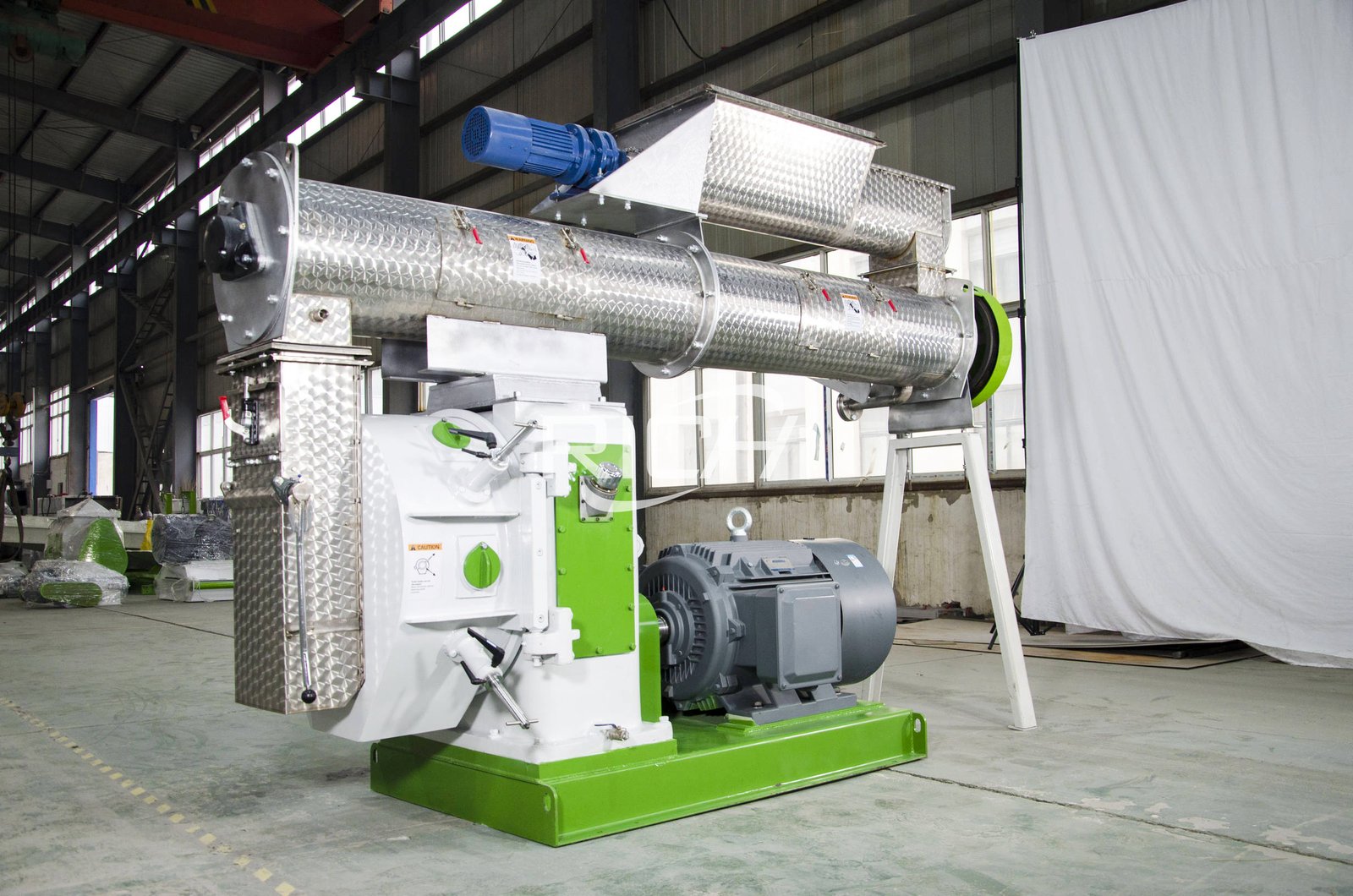



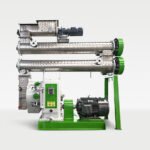
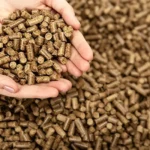

A straw pellet production line is a coordinated material-handling and processing system. It must accept agricultural residues in different physical forms, remove contaminants, reduce particle size, control moisture and feed the pelletizing section consistently. The line may produce biomass fuel, ruminant feed or bedding, but those product routes have different formulation and quality requirements. The design challenge is to balance the capacity of each stage so that a strong pellet mill is not held back by a small shredder, unstable dryer feed or undersized cooler.
RICHI’s straw pellet production line information describes customized systems from 0.5 to 40 t/h for materials such as corn stalks, wheat straw and rice straw. The process may include impurity removal, grinding, drying, mixing for feed, pelletizing, cooling, screening and automated packaging. The product page also gives a process reference of reducing straw moisture to 12%–15% before pelleting when incoming moisture is above 20%, and grinding whole stalks to approximately 2–3 mm for the described process. These values are reference conditions; each project should validate them against its raw material and finished product.
Specify the Straw Supply Before Fixing the Line Capacity
Straw can arrive as round bales, square bales, loose stalks, chopped material or powder. These forms require different receiving and feeding arrangements. Baled material needs bale breaking and coarse shredding before fine grinding; loose straw may need a receiving hopper and metering system designed to prevent bridging; already prepared powder may bypass part of the size-reduction process. The project brief should describe the form and dimensions of each incoming material stream.
Supply volume must be evaluated over the operating calendar. Harvest residues may be available in a concentrated seasonal window, while the pellet plant may be expected to operate throughout the year. Estimate net usable tonnes after collection losses, contamination removal and storage degradation. Include the storage inventory needed to bridge the off-season, and plan covered areas, drainage, fire access, stock rotation and loader routes.
If several residues are used—such as wheat straw, rice straw, corn stalks or barley straw—do not assume that they can all be processed with identical settings. Their fiber length, silica, ash, moisture and bulk behavior differ. Keep batches identifiable and establish blending rules. A process that performs well on dry wheat straw may need different preparation or feeding settings for wet rice straw or coarse corn stalks.
Build a Receiving and Cleaning Section That Protects the Equipment
Field-collected straw can contain soil, stones, wire, metal fragments and other foreign matter. These contaminants can damage cutters, hammer mills, conveyors and pelletizing components. The cleaning section should be chosen from the expected impurity profile and positioned so that material cannot bypass it. Screening and magnetic separation remove different types of contaminants; neither should be treated as a universal solution.
Provide safe access to inspect screens and remove collected impurities. The receiving floor should allow trucks or loaders to unload without blocking finished-product dispatch. If wet and dry materials are stored separately, use clear batch identification and stock rotation. A line that accepts contaminated straw without an inspection procedure may appear to save time at receiving but can create unplanned downtime and higher wear downstream.
The cleaning system should also be matched to peak receiving capacity. If the screen or magnetic separator cannot handle the delivery rate, material may accumulate upstream or be diverted around the equipment. The project should define who inspects the raw material, how rejected loads are handled and how the plant records contamination levels by supplier or field source.
Select Coarse and Fine Grinding From the Pellet Specification
Long stalks generally require bale breaking or coarse cutting before fine grinding. RICHI’s process reference describes whole stalks being reduced through one or two grinding stages to around 2–3 mm. This is not a universal screen size: the appropriate particle distribution depends on the straw type, die, pellet diameter and intended product. Excessively coarse fibers may feed unevenly and weaken pellet formation, while unnecessary fine grinding increases power consumption, dust and material loss.
The grinder should be selected for the largest incoming material, fiber characteristics and target hourly throughput. Check the feed opening, cutting or hammer configuration, screen access, wear-part replacement and protection against tramp metal. If different straw types are processed, confirm whether a common grinding setup can cover the full range or whether screen and rotor changes will be required.
Grinding capacity should include a practical margin for moisture and material variation. A crusher that matches the pellet mill only under ideal dry conditions may starve the press when the straw is wetter or more fibrous. Use a buffer bin between grinding and downstream processing where it helps decouple short interruptions, but design it to avoid bridging and stagnant material.
Control Moisture Without Creating a Dryer Bottleneck
Straw moisture is one of the main variables affecting pellet quality and line stability. The RICHI page states that straw above 20% moisture typically needs air drying or mechanical drying to reach a 12%–15% reference range before pelleting. The actual target must be validated with the buyer’s material, process route and product specification. Measure incoming and outlet moisture using a consistent method rather than judging the material by touch.
Dryer capacity should be calculated from wet-feed throughput, incoming moisture and target moisture. The amount of water to remove determines the thermal duty, while heat-source efficiency, residence time, airflow, exhaust conditions and material behavior influence the equipment selection. Consider whether the plant can use natural or covered air drying for part of the year and mechanical drying when weather or supply conditions require it.
A dryer must receive material evenly. Surges from the crusher can disturb residence time and create inconsistent outlet moisture. Metering conveyors, buffer storage and moisture sampling help stabilize the process. The project should also coordinate hot-air generation, fuel handling, exhaust, dust collection, fire protection and cleaning access. The dryer should be evaluated as part of the whole line, not as an isolated machine rating.
Separate Fuel and Feed Pellet Routes Where Their Requirements Differ
A straw fuel pellet line typically emphasizes cleaning, grinding, drying, pelletizing, cooling, screening and packing. The die compression, finished pellet dimensions and moisture targets should suit the intended boiler or industrial user. Fuel acceptance may include dimensions, durability, fines, moisture and ash. The plant should measure saleable product after screening rather than quoting only the press discharge rate.
A straw feed pellet line needs additional formulation, batching and mixing. Straw is often blended with grains, protein meals, minerals or other ingredients to meet the intended ration. Steam conditioning may be required to soften fibers and support pellet formation. The feed formula and nutritional claims must be established by the buyer’s feed team; straw alone should not be presented as a complete feed.
A single plant may be designed to make both fuel and feed pellets, but the changeover must be planned. Separate ingredient storage, cleanout procedures, recipe controls and product identification may be required. The buyer should decide whether the commercial benefit of a dual-purpose line justifies the additional equipment and operating controls. If the two products require substantially different preparation or quality systems, separate process sections may be more practical.
Balance Pelletizing, Cooling and Packaging Capacity
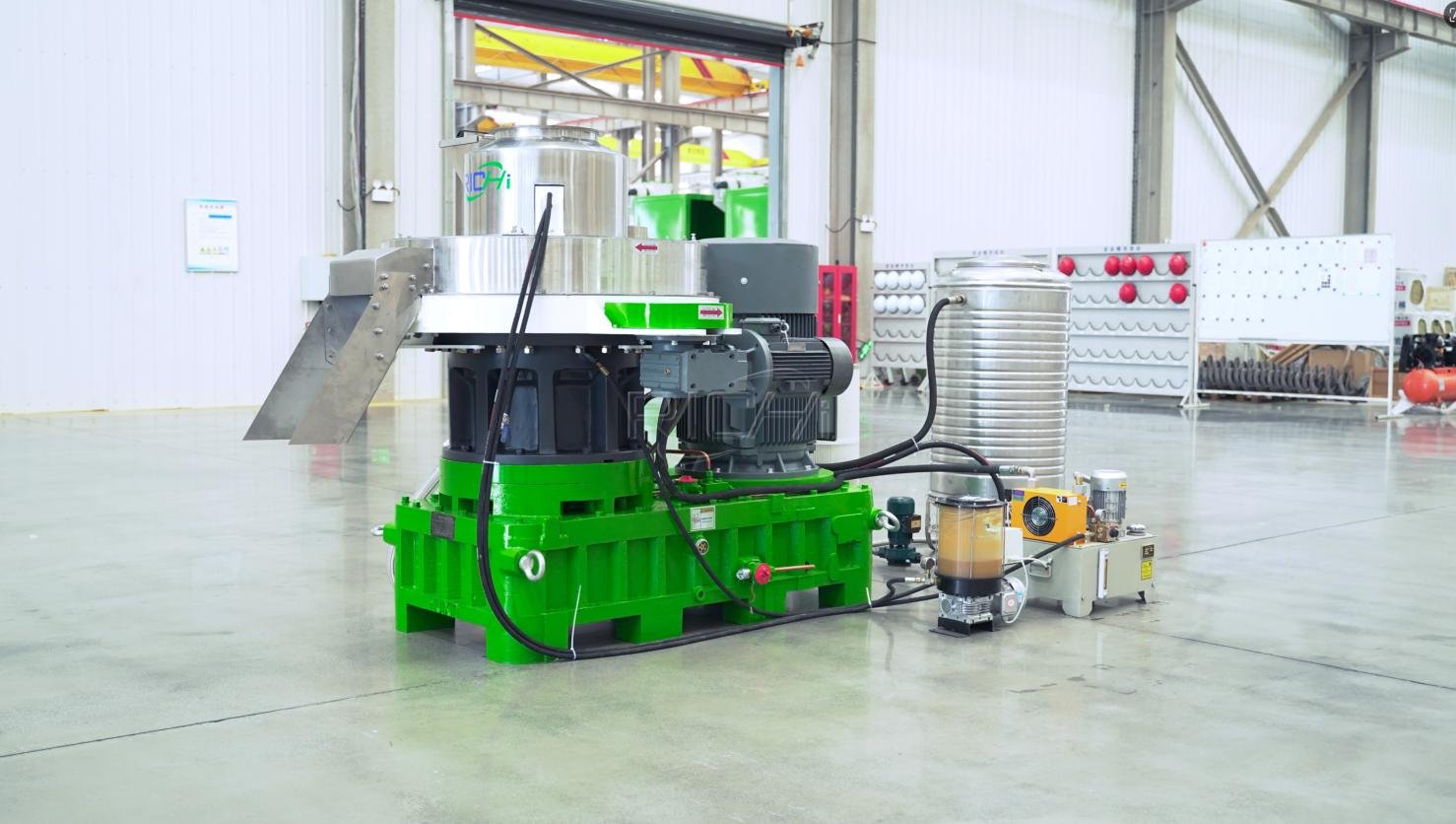
The pellet mill should be selected based on the prepared material flow, target pellet diameter, operating hours and product route. Its rated capacity is meaningful only under stated raw-material and moisture conditions. The upstream grinder and dryer must supply the press consistently, while the cooler, screen and packaging equipment must handle the resulting discharge. The line should be balanced using saleable output, not the largest number in an equipment table.
Cooling reduces pellet temperature and helps stabilize the product before handling and storage. The RICHI page describes counterflow cooling and a gentle discharge system, with a typical cooling period of approximately 6–15 minutes for the referenced equipment. Actual residence time depends on pellet dimensions, throughput and operating conditions. Screening then removes fines and off-size pellets; any recycle route should be sized and monitored so it does not overload the press.
Packaging should match the market and dispatch method. Fuel pellets may be bagged or bulk-loaded, while feed pellets need packaging that protects product quality and supports traceability. Confirm bag weight, packing rate, weighing accuracy, palletizing, warehouse capacity and dust extraction. If the line uses automatic PLC control, define which process variables are monitored and which alarms or interlocks stop upstream feeding.
Plan the Layout for Continuous Flow and Maintenance
A general arrangement should provide a logical flow from raw-material receiving to finished-product dispatch. Minimize unnecessary transfer points and avoid crossing raw-material traffic with finished-product handling. Position buffer bins where they stabilize flow between stages, and ensure operators can access screens, bearings, motors, dies and lubrication points safely.
Verify foundation loads, floor levels, anchor positions, steel platforms, pits and lifting access before civil work is completed. The project should define who supplies the transformer, distribution panels, cables, building services, heat source, dust collection, external conveyors and installation lifting equipment. An interface register makes the boundary between supplier and buyer scope explicit.
Dust collection should be coordinated with grinding, transfer, screening and packing. Provide filter access, dust discharge and a cleaning plan. Controls should prevent upstream machines from feeding a stopped downstream section. Emergency stops, overload protection, guards and safe isolation procedures must be checked before production trials.
Prove Performance With Representative Straw
Commissioning should begin with mechanical and electrical inspections, lubrication checks, guards, no-load tests where permitted and interlock verification. Then introduce representative straw gradually. Record source, material type, moisture, bale or particle condition, cleaning results, grinder settings, dryer settings, feeder rate, die configuration, pellet diameter, cooling, screening and saleable output.
A trial on unusually dry, clean straw does not prove that the line can handle the normal supply range. If the project uses multiple materials or blends, test the important operating cases separately. Define the test duration, sampling method, finished-product specification and utility conditions before the trial. If output or quality is outside target, identify the limiting stage and repeat the test after corrective action.
Conclusion: Match Every Process Stage to the Straw You Receive
A reliable straw pellet production line is built around the actual residue supply, not a generic capacity label. Receiving, cleaning, grinding, drying, formulation where required, pelletizing, cooling, screening and packaging must operate as one coordinated system. The most important project decisions concern raw-material form, moisture, particle size, product route, utilities and the capacity balance between machines.
For the available process configurations, review the RICHI straw pellet production line solutions. Prepare representative straw samples, supply estimates, product specifications, site layout and utility information before finalizing the equipment scope.