


The cattle industry operates on volumes that dwarf most other livestock sectors. A single commercial feedlot may house tens of thousands of animals, each consuming 20 to 30 pounds of feed daily. Dairy operations, while smaller in herd size, face equally demanding feed requirements with the added complexity of producing multiple rations for different production stages. In this context, the decision of how to process feed is not merely operational—it is strategic, with implications that reach deep into the balance sheet.
The Scale Imperative: Why Processing Matters More for Cattle
Feed represents the single largest variable cost in cattle production, typically accounting for 60-70% of total operating expenses. For a 10,000-head feedlot, annual feed costs can exceed $5 million. In this environment, even small improvements in feed efficiency or reductions in waste translate into substantial financial returns. Yet many operations continue to rely on purchased processed feed or outdated milling equipment that fails to capture the full value of their feed ingredients.
The economics of on-farm processing are compelling. By grinding and pelleting feed in-house, producers can reduce ingredient costs by sourcing grains and forages directly from local markets or their own fields. They gain control over formulation, allowing them to adjust rations in response to changing cattle requirements or ingredient availability. They also eliminate the markup and logistics costs associated with commercial feed mills.
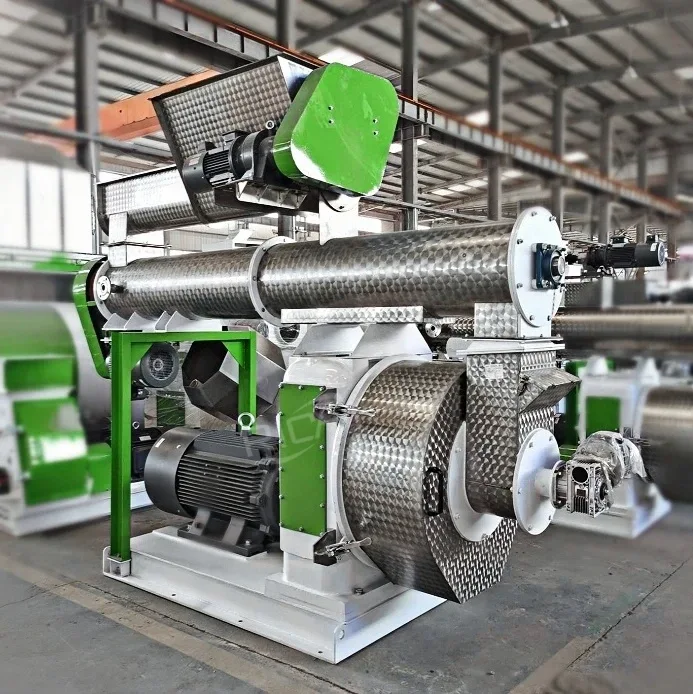
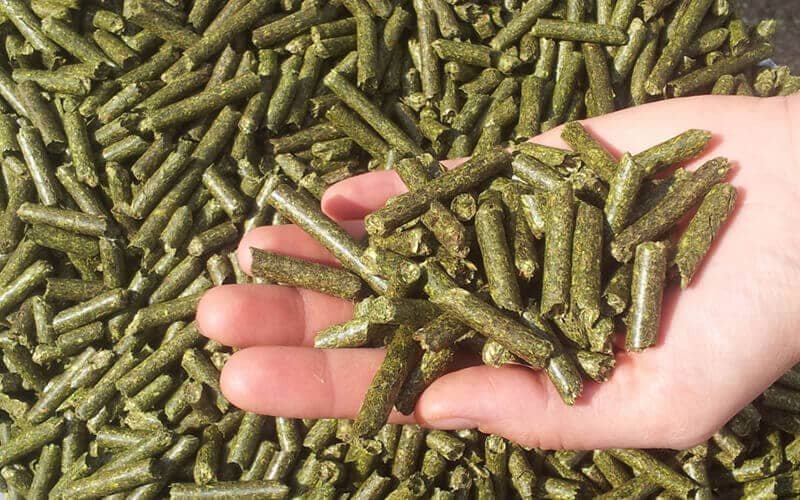
Perhaps most significantly, on-farm processing enables producers to capture the efficiency benefits of pelleting. Numerous studies have demonstrated that pelleted rations improve feed conversion in cattle by 5-10% compared to traditional meal or textured feeds. For a feedlot feeding 10,000 head, this improvement can save hundreds of thousands of dollars annually in feed purchases. A properly configured cattle feed pellet machine delivers these savings consistently, producing durable pellets that maintain their integrity through handling and feeding systems.
Ration Complexity in Modern Cattle Production
Modern cattle operations rarely feed a single diet. Dairy herds require distinct rations for dry cows, lactating cows at different production levels, and heifers at various growth stages. Feedlots formulate starter rations for newly received cattle, grower rations for the mid-feeding period, and finisher rations that maximize energy intake and marbling. Each of these formulations has unique physical characteristics that influence processing requirements.
High-grain finishing rations, which may contain 70-80% concentrates, are relatively easy to pellet due to their high starch content. The gelatinization of starch during conditioning provides natural binding that produces dense, durable pellets. However, these rations also generate significant heat during processing, requiring careful temperature control to prevent damage to heat-sensitive nutrients and feed additives.
High-forage rations, typical of dairy operations and backgrounding yards, present a different set of challenges. The fiber content of alfalfa, corn silage, or grass hay provides essential rumen function but does not bind readily during pelleting. These rations require higher moisture levels during conditioning and often benefit from the inclusion of binding agents or higher compression ratios to achieve adequate pellet durability.
Related Post: https://pelletizerextruder.com/cattle-feed-pellet-making-machine/
Total mixed rations (TMR), which combine forages, grains, protein supplements, and minerals in a complete feed, represent the most complex formulation category. The variability of ingredients—from wet distillers grains to dry hay to liquid molasses—demands processing equipment capable of handling diverse material characteristics without compromising pellet quality.
Processing Technology for Cattle Feed
The pelleting of cattle feed shares basic principles with other species but differs in important details. Cattle rations typically contain longer fiber particles than swine or poultry diets, which influences the grinding and conditioning stages. The hammer mill or roller mill must achieve a particle size that balances rumen function with pelleting efficiency—fine enough to produce durable pellets, but coarse enough to maintain adequate physically effective fiber.
Conditioning is particularly important for high-forage rations. The fibrous components absorb moisture differently than grains, requiring longer conditioning times or higher steam levels to achieve uniform hydration. Inadequate conditioning results in pellets that crumble during handling, generating fines that reduce feed efficiency and increase wastage.
The die specifications for cattle feed reflect the abrasive nature of many ingredients. Forages, mineral supplements, and by-product feeds contain silica and other abrasive compounds that accelerate wear on die surfaces. Dies with appropriate metallurgy and compression ratios are essential for maintaining production efficiency and pellet quality over extended operating periods.
Cooling and handling systems must also accommodate the specific characteristics of cattle pellets. The higher fiber content of cattle rations can make pellets more susceptible to moisture absorption, requiring careful attention to cooling and storage conditions to prevent spoilage and maintain durability.
Nutritional Considerations in Pelleted Cattle Feed
The nutritional benefits of pelleting extend beyond improved feed conversion. The heat and pressure of the pelleting process gelatinize starches, making them more readily digestible in the rumen. This increased starch availability can improve energy utilization, particularly in high-grain finishing rations where maximizing energy intake is the primary objective.
Pelleting also reduces feed sorting, a common problem in cattle operations where animals selectively consume preferred ingredients while leaving less palatable components. When feed is pelleted, all ingredients are uniformly distributed throughout the pellet, ensuring that each animal receives a balanced ration with every mouthful. This is particularly valuable in dairy operations, where consistent nutrient intake is essential for maintaining milk production and composition.
The durability of pellets influences intake and rumen function. Pellets that break down gradually in the rumen provide a steady release of nutrients, supporting stable fermentation and reducing the risk of acidosis. Pellets that disintegrate too quickly may cause rapid starch fermentation and pH decline, while pellets that remain intact too long may reduce intake and limit nutrient availability.
Operational Considerations for Commercial Feedlots
For large commercial operations, feed processing capacity must match the scale of the herd. A feedlot finishing 10,000 head requires approximately 100 tons of feed daily, depending on ration formulation and target gains. This volume demands processing equipment capable of sustained high throughput with minimal downtime for maintenance.
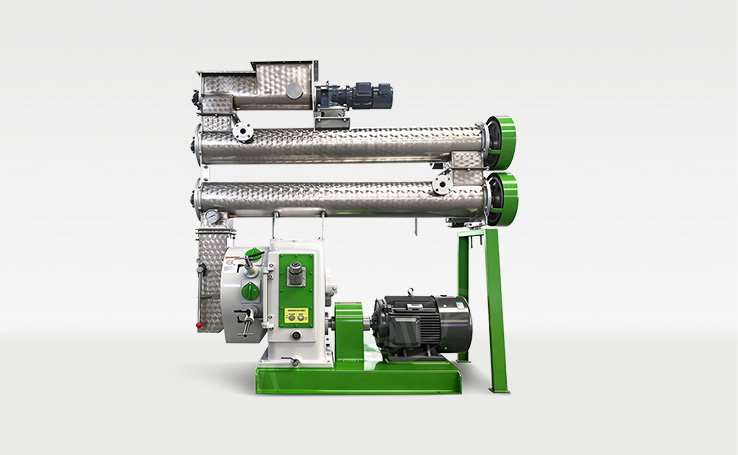
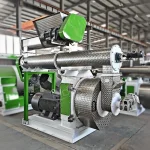
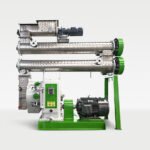
A industrial feed pellet machine for sale in the 5-10 ton per hour range provides the capacity needed for medium to large operations while offering the flexibility to produce multiple ration types. The ability to switch between formulations without extensive downtime is essential for operations that feed different diets to different groups of cattle. Quick-change die systems, variable-frequency drives, and automated control systems all contribute to this flexibility.
Energy efficiency becomes increasingly important as production scales. Gear-driven transmissions, which deliver approximately 15% higher efficiency than belt drives, reduce power consumption and operating costs over the equipment’s lifespan. Variable-speed feeders allow precise control of material input, optimizing throughput while maintaining pellet quality. These features, while representing higher initial investment, deliver substantial returns through reduced operating costs.
Maintenance and Wear Management
The abrasive nature of cattle feed ingredients accelerates wear on processing equipment, making maintenance planning essential for reliable operation. Dies and rollers typically require replacement every 500 to 2,000 hours of operation, depending on diet composition and processing conditions. Regular inspection and scheduled replacement prevent unexpected breakdowns that can disrupt production and increase costs.
The conditioning system, with its exposure to steam, heat, and abrasive materials, requires particular attention. Stainless steel construction provides corrosion resistance and extends component life. Regular cleaning prevents buildup of feed residues that can harbor mold and bacteria, ensuring feed quality and safety.
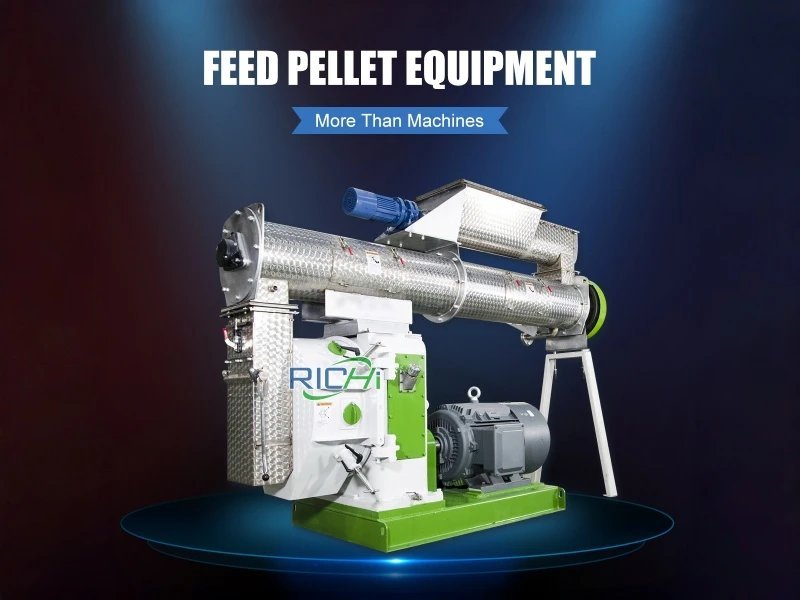
For operations considering equipment upgrades or new installations, evaluating the total cost of ownership is essential. RICHI Machinery offers equipment engineered for durability and reliability in demanding cattle feed applications. With over 30 years of experience and a global presence spanning more than 140 countries, their SZLH series incorporates features specifically beneficial for cattle operations: gear-driven main drives for efficiency, stainless steel conditioners for corrosion resistance, and robust construction that withstands the abrasive nature of cattle feed ingredients.
Future Trends in Cattle Feed Processing
The cattle feed processing industry continues to evolve in response to changing market conditions and production practices. The growing emphasis on sustainability has increased interest in processing by-product feedstuffs—distillers grains, corn gluten feed, and other coproducts from ethanol and food processing—that would otherwise be wasted. These materials, often with high moisture content or variable nutrient profiles, present processing challenges that equipment manufacturers must address through design innovation.
Automation and data integration are transforming feed mill operations. Modern control systems allow producers to monitor production parameters remotely, track ingredient usage, and optimize formulations in real-time. Predictive maintenance capabilities reduce downtime and extend equipment life, while process control systems ensure consistent pellet quality across production runs.
The trend toward larger, more specialized operations will continue to drive demand for high-capacity processing equipment. As the cattle industry consolidates into fewer but larger operations, the economic advantages of on-farm feed processing become increasingly compelling. Producers who invest in quality equipment and develop processing expertise position themselves to capture these advantages and improve their competitive position.
For cattle producers seeking to improve feed efficiency and reduce costs, investing in modern processing equipment represents one of the highest-return decisions available. The technology is proven, the economics are compelling, and the path forward is clear.